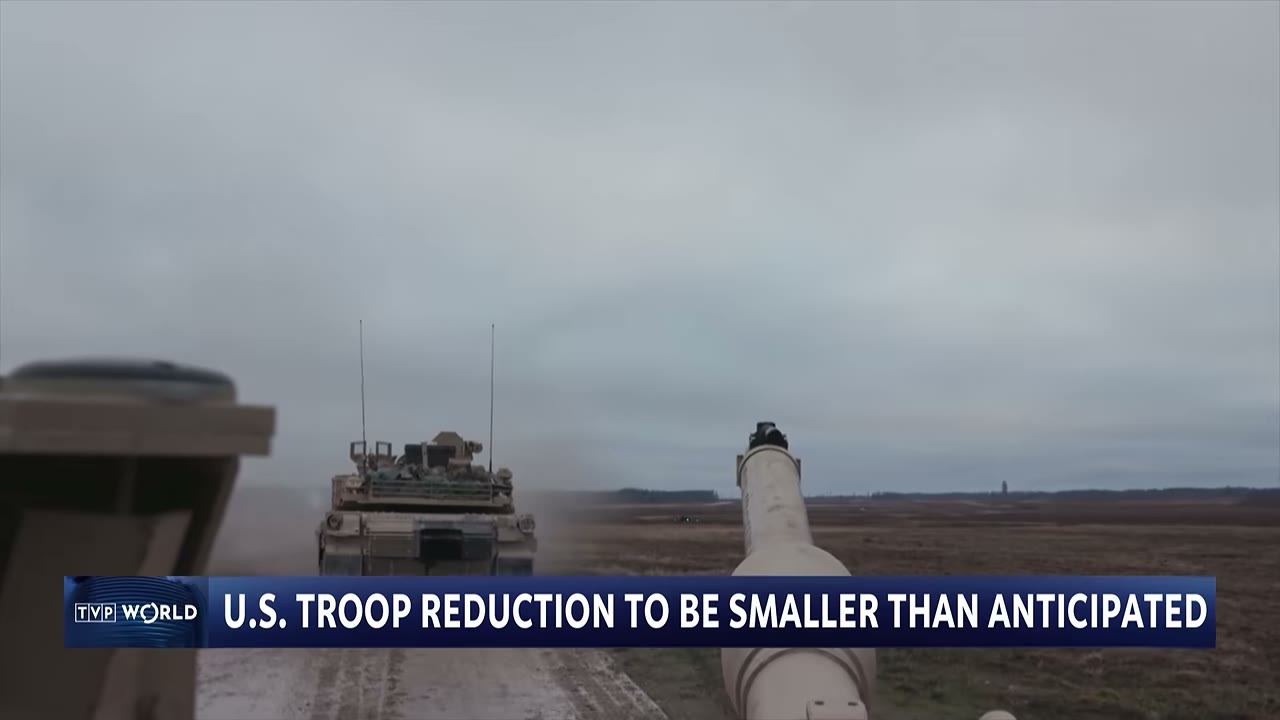
The Pentagon will pull about 5,000 troops from Europe instead of the feared 25,000, with Germany hardest hit. This round-up also covers Estonia closing Russian border crossings, Ukraine strikes, and Gagauzia's governor vote.
1US to cut Europe troop withdrawal to about 5,000, Germany hit hardest
The Pentagon will pull far fewer troops from Europe than feared — about 5,000 instead of 25,000 — and Germany will absorb most of the cuts. The US currently keeps roughly 80,000 soldiers on the continent, with about 38,000 in Germany, NATO's largest contingent there.
Bloomberg reported that Washington now looks likely to withdraw a brigade, around 5,000 troops, rather than the 25,000 previously estimated out of the 80,000 total.
The smaller cut may reflect increased European defense spending, and some voices suggest a growing understanding within the Trump administration that US defense alliances are symbiotic. "There is no substitute for a strong NATO forward presence," one voice in the report said.
Reports also suggest Washington may strengthen its presence on NATO's eastern border, closest to Russia. Defense Secretary Pete Hexteth is not due to present final recommendations to President Trump until December 1.
2Estonia to close all Russian border crossings after foiled arson attack
Estonia will close all three of its road border crossings with Russia from December 1, after authorities blamed a foiled arson attack on Russian military intelligence.
Prime Minister Kaia Kallas said necessary measures would ensure all border crossings with Russia can be closed indefinitely. The interior minister confirmed the Narva, Luhamaa and Koidula crossings would shut to pedestrians and vehicles.
Eight people were detained over an attempted arson attack on Threod Systems, a company that makes military drones and surveillance equipment. Investigators claim the suspects acted on orders from the GRU, Russia's military intelligence directorate, which on the night of November 14 ordered a sabotage attempt against the firm.
Significant losses were avoided through enhanced security and a rapid law enforcement response. "We will not be intimidated," an official said.
3EU naval force boards suspected Russian shadow fleet tanker
European troops boarded a tanker suspected of belonging to Russia's shadow fleet in the Mediterranean on Friday, the EU's top diplomat announced.
Kaia Kallas said the EU will keep disrupting the fleet Moscow uses to dodge sanctions. During the boarding, the navy conducted a flag check and confirmed the vessel was flying a foreign flag.
Experts say flag security underpins peace and security at sea: without knowing which state controls a vessel, there is no one to hold responsible. Russia is believed to use aging tankers under false flags to keep exporting oil, and experts say the fleet also supports hybrid operations, including sabotage such as ruptures of high-voltage cables on the Baltic Sea floor.
The EU naval force was launched to enforce the UN arms embargo on Libya and has been given added duties. EU foreign ministers are expected to approve new sanctions on Monday targeting banks, buyers and companies supporting the shadow fleet.
4Ukraine strikes Russian oil, drone and energy sites; civilian toll rises
Four people were killed and 69 injured in Russian attacks on Sunday, as Ukraine hit back at Russian oil, drone and energy sites overnight.
Ukraine struck two petrochemical and oil refining plants in Tatarstan, a military airfield in Astrakhan, a drone launch site in Orel, a helicopter factory in Bryansk and energy infrastructure in Rostov.
The strikes follow weeks of systematic Russian bombing of Ukrainian civilian infrastructure, especially electrical facilities, ahead of winter. President Zelenskyy said more and more Russian attacks are reaching their targets because Ukraine has fewer chances to intercept drones.
He also raised restrictions on Starlink for Ukrainian drones, saying they are helping Russia hit more critical infrastructure.
5Gagauzia votes for governor as Moldova checks Russian influence
Voters in Gagauzia, Moldova's pro-Russian autonomous region, are electing a governor as Chisinau oversees the vote for the first time and investigates alleged vote-buying.
Eight candidates are running in the region bordering Ukraine. Nearly eight in ten ballots printed for Sunday's vote were in Russian, and only about 6% in Romanian, the state language.
Moldova's Central Electoral Commission took over organizing the vote from the autonomy's own electoral body, and nearly 200 national and international observers were deployed to prevent massive vote-buying. In the 2024 EU referendum, about 95% of voters in Gagauzia rejected Moldova's path to the European Union.
Local investigative media reported callers from Russian numbers offering residents money to vote for Fedor Gagauz of the pro-Russian Socialist Party; he denies any connection to a TikTok campaign backing him. A second round cannot be ruled out.
6Prague protesters rally against Czech public media funding overhaul
Hundreds of thousands of people filled Prague's Letná Park to protest the Czech government's plan to replace public media license fees with direct state funding.
The protest was dubbed "Letna vs. 4:36" after Prime Minister Andrej Babiš's government pushed the public service media bill through its first reading at 4:36 a.m. on October 24. The plan would abolish the license fee funding Czech Television and Czech Radio and replace it with state budget money — cut by 15%.
Organizers "A Million Moments for Democracy" demand the bill's withdrawal. Babiš apologized for the early-hour vote. Train and bus tickets from Brno, Ostrava and Pilsen were almost sold out as people traveled to the capital.
Babiš's ruling coalition holds a parliamentary majority and intends to approve the bill in 2027. More protests are planned.
7Central Europe economies resilient but Poland's public debt costs soar
Poland's economy is growing at 3.5%, one of the highest rates in the EU — but its public finances are another story.
Central and Eastern Europe has stayed relatively resilient despite energy prices and living costs driven up by the war in Iran. Polish companies carry very little debt and have not been hit by high interest rates, leaving their balance sheets healthy.
The public sector is weaker. Poland already runs one of the highest deficits in the European Union, and sharply rising borrowing costs since the war began could make it worse. "We have to pay much more to accumulate debt," an analyst said, warning that more borrowing means more interest.
Hungary went through the same pattern, with interest payments consuming more and more. Its newly elected Prime Minister Viktor Orban has set a goal of adopting the euro by the start of the next decade.
8Polish pilgrims pray at Notre Dame for Krakow shooting victims
Polish pilgrims gathered at Notre Dame Cathedral to pray before a replica of the Black Madonna of Częstochowa and honor the victims of the recent shooting in Krakow.
It has been almost two years since the cathedral reopened after the 2019 fire. The copy of the icon, donated by monks in 2018, sits in the Polish Chapel and was saved from the fire. A year ago the Polish-French community celebrated Mass at Notre Dame for its reinstallation.
On Saturday the same group returned for the anniversary, with organizers saying 200 people took part. For some, it was their first visit since the fire. "I have been waiting for this moment for a long time," one participant said.
After the pilgrimage, the group went to a nearby church for Mass in Polish.
9Analyst: unclear motives behind smaller US troop cut
Washington never explained why it first planned to withdraw more troops from Europe and now fewer, according to an Atlantic Council analyst.
"It's impossible to know," Elizabeth Bra, a senior fellow at the Atlantic Council, said of the motives, because the message from the Pentagon and the White House did not explain the numbers. She called the smaller withdrawal good news, noting that US troops in Europe, Japan and South Korea help America project power.
She said Washington has repeatedly argued that European countries should spend more on defense so the US could reduce its role. One likely reason for the smaller cut, she guessed, is that military leaders warned civilian leaders about increased threats in Europe, including Russia's increasingly belligerent stance.
She said Russia has stayed just below the threshold of military violence but could escalate at any moment.
10Analyst skeptical of details on US troop redeployment to NATO east
No official plan has been presented to explain where thousands of redeployed U.S. troops will actually go, an analyst says. Questions about Poland, the Baltic countries or a joint effort remain unanswered.
The analyst said a press conference or official meeting would be the place to explain the plan to European leaders, military leaders and the public. "It could be a press conference or some other statement, but it hasn't happened yet," the analyst said.
A detailed scheme may already exist, with destinations fixed and troops already heading there. Even so, the analyst argued that hearing the plan would help NATO unity, since the public in protected countries could gain, lose or suffer if current arrangements change. Infrastructure and planning also have to be worked out.
11Analyst sees better odds for permanent US base in Poland
Poland's chances of hosting a permanent U.S. military base now look better, an analyst says, after Polish Defense Minister Wladyslaw Kosyniak-Kamysz flew to Washington to talk with Pete Hegseth.
"The odds seem to be in favor of that," the analyst said. An announcement is expected in early December.
Poland has lobbied hard for a permanent U.S. presence. The analyst recalled the first Trump administration, when Poland offered to host a base and it was even going to be named after Trump.
That was not a given: some circles held that the U.S. would keep a permanent NATO presence only where it already stood at the end of the Cold War, such as Germany and Italy, not in the Baltics or Poland. That is now changing.