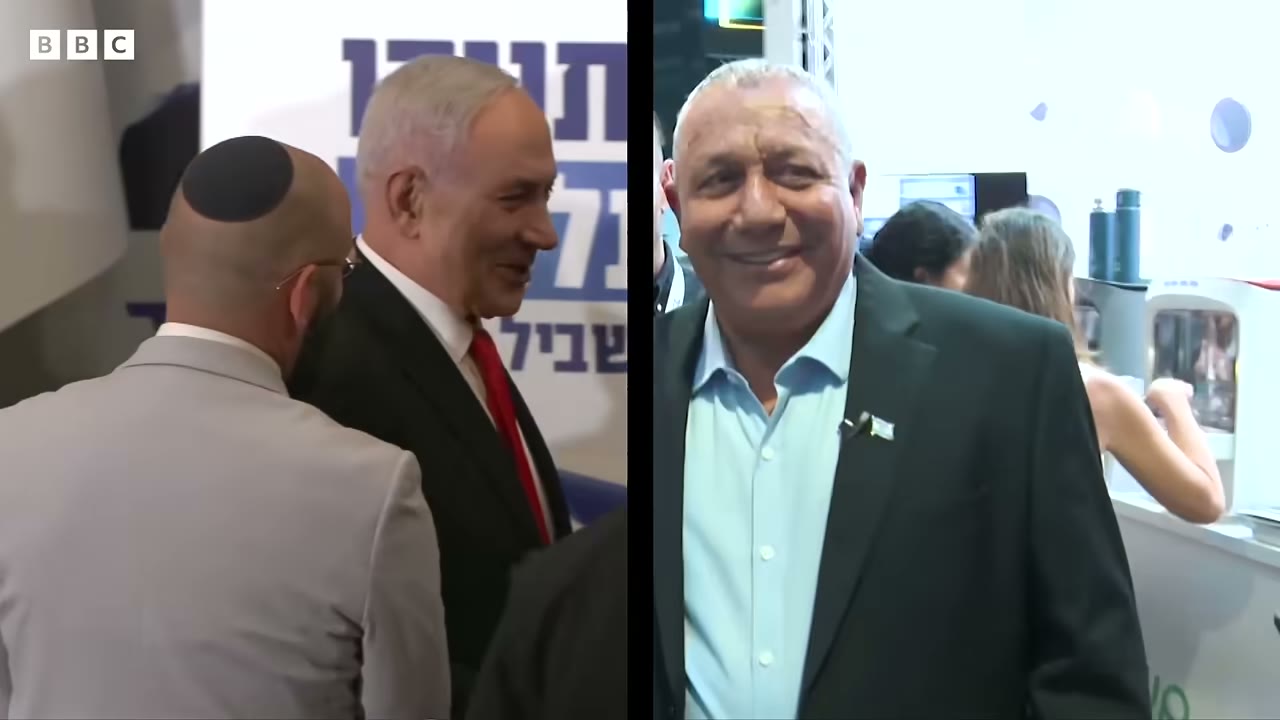
A BBC Global Eye report from Israel and the occupied Palestinian territories examines why young Israeli first-time voters are shifting right. With Netanyahu and former army chief Eisenkot neck and neck, October 7th, security and the fading two-state solution shape a changed political centre.
1Young Israeli first-time voters shift right as election looms
Just over half a million young Israelis will vote for the first time in the coming election, and they are leaning further right than their Gen Z peers elsewhere. Prime Minister Benjamin Netanyahu faces a strong challenge from Gadi Eisenkot, a former army chief. But although the two men are on opposing sides, politically they are both on the right. That tells you something significant about Israeli politics, and in particular the politics of young people. While Gen Z in other parts of the world may be more left wing, young Israelis are pulling further and further right, coming of age at a time of massive political change.
2Liberal first-time voters Michal and Yonatan back Gaza military policy
Michal and Yonatan are first-time voters who describe themselves as liberal — and Yonatan sees no contradiction in supporting Israel's military policies in Gaza. "You need to solve this problem because if you let... like leave Gaza alone right now, you have no guarantee that Hamas wouldn't rise again and there won't be another October 17th," he said. Both strongly support equal rights for all. Michal, who will vote for Israel's most left-wing Jewish party, explicitly raised Palestinians in the West Bank and said equal rights for them should be a priority. "I think the most important is equal rights to everybody," she said, adding she cares about LGBTQ rights and the rights of people living in the West Bank.
3Centre-right voters Tomer and Oren want change, not Netanyahu
Tomer and Oren are both 18 and describe themselves as centre-right. Tomer said he believes in limiting ideologies on the left, and on the right he believes in economics and security. "I'm not an extremist, but I do believe," he said. He does not agree with parts of the current government. "I don't have anything right now in mind that I can agree that he did well," he said of Netanyahu. "So that's why the most important thing for me is right now change." Polls suggest Netanyahu and Gadi Eisenkot are neck and neck in the race to be prime minister.
4Netanyahu and Eisenkot neck and neck in election race
Benjamin Netanyahu and Gadi Eisenkot are neck and neck in the race to be prime minister. Netanyahu leads a coalition empowered by right-wing settlers who clashed with key state institutions and faced fierce criticism over failures before the October 7th attacks. He has also been indicted on serious corruption charges, which he denies, and paints himself as the only leader who can keep Israel safe. "Do you want right? Yes," he said. "I know what you want, you want to fight." His coalition partners represent ultra-Orthodox Jews and the Israeli far right. A number of Arab parties are on the ballot, despite attempts by Netanyahu's government to disqualify them.
5Eisenkot pitched as hawkish but moderate alternative
Gadi Eisenkot's Yashar party is seen by supporters as a steadier, more pragmatic alternative to Netanyahu's coalition — but Eisenkot remains firmly hawkish on key security issues. "The IDF must stay in the Gaza Strip until the dismantling of Hamas's military power and disarmament," he said. "Until that has been achieved, there is neither absolute victory nor victory." Views like Eisenkot's, once considered staunchly right wing, are now often cast as a moderate alternative, and some young Israelis are considering voting for him. "He has experience, he was a Ramatkal," one said. "I think he's realistic. He's charismatic."
6October 7th failures polarise young voters in opposite directions
In 2023, around 1,200 Israelis were killed and 251 taken hostage in multiple attacks by Hamas-led militants from Gaza. Israel launched a military offensive in response, triggering a war that has killed more than 74,000 Palestinians, according to Gaza's Hamas-run health ministry, whose figures are considered reliable by the UN. For young voters, the importance of October 7th lies in the intelligence failures they perceive by Netanyahu's government. "They need to take responsibility and we need to change," one said. Michal and Oren, who lean more to the left, were polarised differently. "I became more liberal and more open to the Arab community because of it," Michal said.
7Reporter: Israel's political centre has shifted sharply right
Three quarters of first-time Jewish voters in Israel identify as right or centre-right, according to polling. Some of those voting for right-wing parties see themselves as centrist and even liberal — a sign of how far the political centre has shifted. "You can identify me as being relatively liberal, supporting certain liberal values like gay marriage and civil marriage, which currently doesn't exist in Israel," one said. "But you want to see a strong military." The gradual shift began after the breakdown of the Oslo Accords in the 1990s. Support for a two-state solution was once associated with liberalism in Israel. Now young Israelis are redefining what liberalism means.
8Likud activist Nof denies Palestinian civilians exist
Nof, an activist for Likud, has expressed extreme views about Palestinians that are also shared by others within the Likud and across the Israeli right. "They're not civilised people," she said. "I think there are no civilians in Gaza or Judea and Samaria." Nof calls the occupied West Bank Judea and Samaria, biblical names that emphasise Jewish claims to the land. Denying the existence of Palestinian civilians portrays an entire population as legitimate targets. Similar rhetoric from Israeli leaders has been cited in the genocide case at the International Court of Justice, which Israel rejects. Nof is backing Netanyahu. "I think if Netanyahu hadn't been Prime Minister during the war, there would have been a disaster after the October 7th," she said.
9Why young Israelis moved right: conflict management and isolation
Netanyahu has long pursued what is referred to in Israel as managing the conflict. He has actively blocked moves towards Palestinian statehood and sought to prevent Palestinian attacks or acts of resistance on Israeli soil. The separation barrier, begun in the early 2000s, has made it harder for Palestinians from the occupied West Bank to enter Israel. As a result, many Israelis have had almost no interaction with Palestinians, nor are they aware of Palestinians' day-to-day realities. International journalists are largely blocked from reporting in Gaza, and domestic media coverage of life in Gaza is scant. Over the past three years, international criticism of Israel's military conduct has increasingly been painted as unwarranted and attributed to a global rise in anti-Semitism. Netanyahu has dismissed ICC warrants for his arrest over alleged war crimes.
10Even if Netanyahu loses, right-wing vision likely endures
Even if Benjamin Netanyahu loses this election, the result would still reflect broad support for an increasingly right-wing vision of Israel, one that projects military strength and maintains control over Palestinians. For many voters, the election is about the future of Israel's Jewish citizens — and whether those in power abide by democratic norms and institutional checks and balances. The outcome, then, may change who governs without reversing the country's rightward shift.