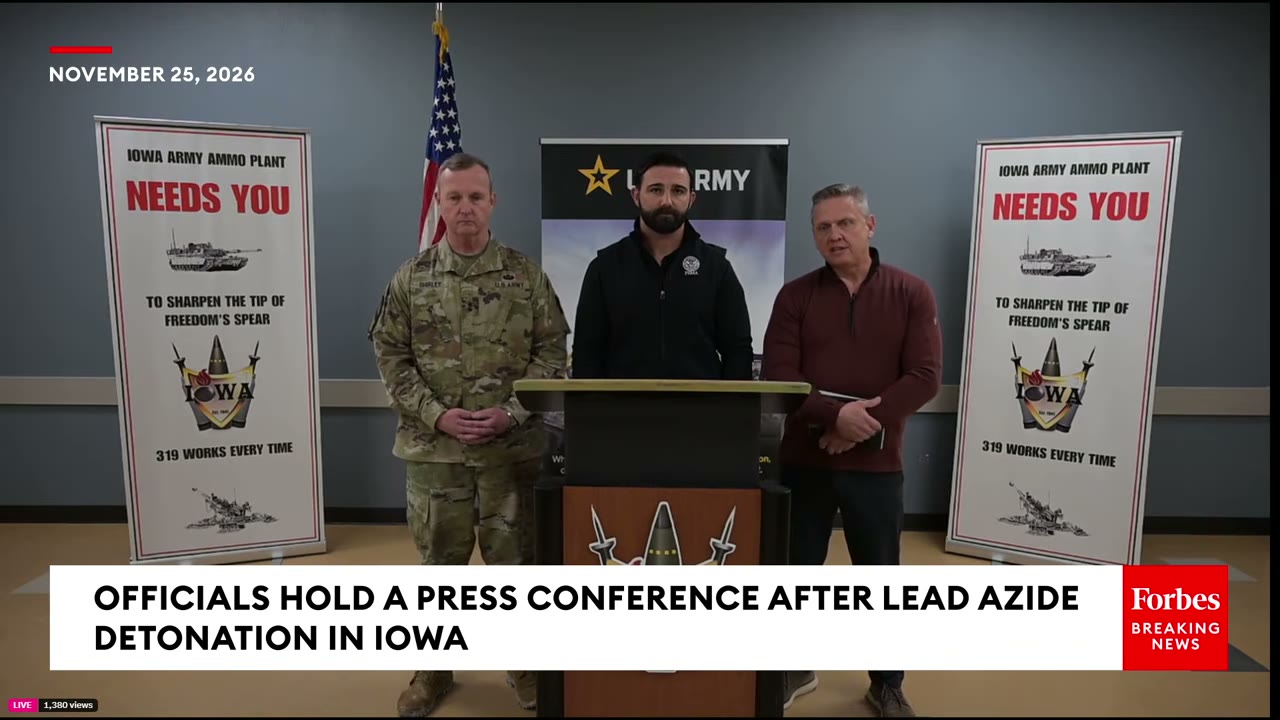
ATF Director Robert Cekada explains how degraded wet lead azide explosives stored at an Iowa Army ammunition plant since 2009 were finally addressed in a 2026 detonation plan. He says the blast was channeled underground to limit lead release into the atmosphere.
1ATF chief says degraded lead azide problem dates to 2009
The head of the ATF says his agency inherited an explosives problem that began in 2009 and was left unaddressed for years. Director Robert Cekada said wet lead azide explosives were brought from a warehouse outside Middleton and moved to the Army Ammunition Plant in Iowa, where they were placed in underground storage facilities H2 and H3.
Even then, the paperwork flagged them as old and degraded, and the military was already concerned. "Nothing was done to address this issue under that administration," Cekada said.
That inaction pushed the problem onto the current administration. Cekada said the agency moved as soon as it learned more about the condition of the material, setting the stage for a federal plan to deal with it.
268 crystallized lead azide barrels trigger 2026 mitigation plan
Sixty-eight barrels are coated in crystallized lead azide — on their bodies, lids and openings — and that discovery set off a federal response. The ATF's director, Robert Cekada, said the administration met in March 2026 and developed a plan to properly address the threat posed by the explosives.
He pointed to General Shirley's remarks on the efforts made to help the agency build a risk mitigation plan. The barrels sit at the Army Ammunition Plant in Iowa, in the underground storage facilities H2 and H3.
The count matters: each barrel carries a sensitive explosive that has degraded over years in storage. The plan now centers on mitigating the risk those 68 containers pose.
3Trump and Miller gave ATF access to federal resources
President Trump and Chief of Staff Miller gave the ATF access to "all the tools and resources of the federal government" to make sure threat mitigation measures move forward, according to the agency's director. Robert Cekada said that backing supplied equipment the ATF could never have used in years past.
He credited that support as the administration worked with the agency on a risk mitigation plan for the lead azide explosives stored at the Army Ammunition Plant in Iowa.
Cekada said he can confirm with absolute certainty — a claim he was still finishing when the clip cuts off.