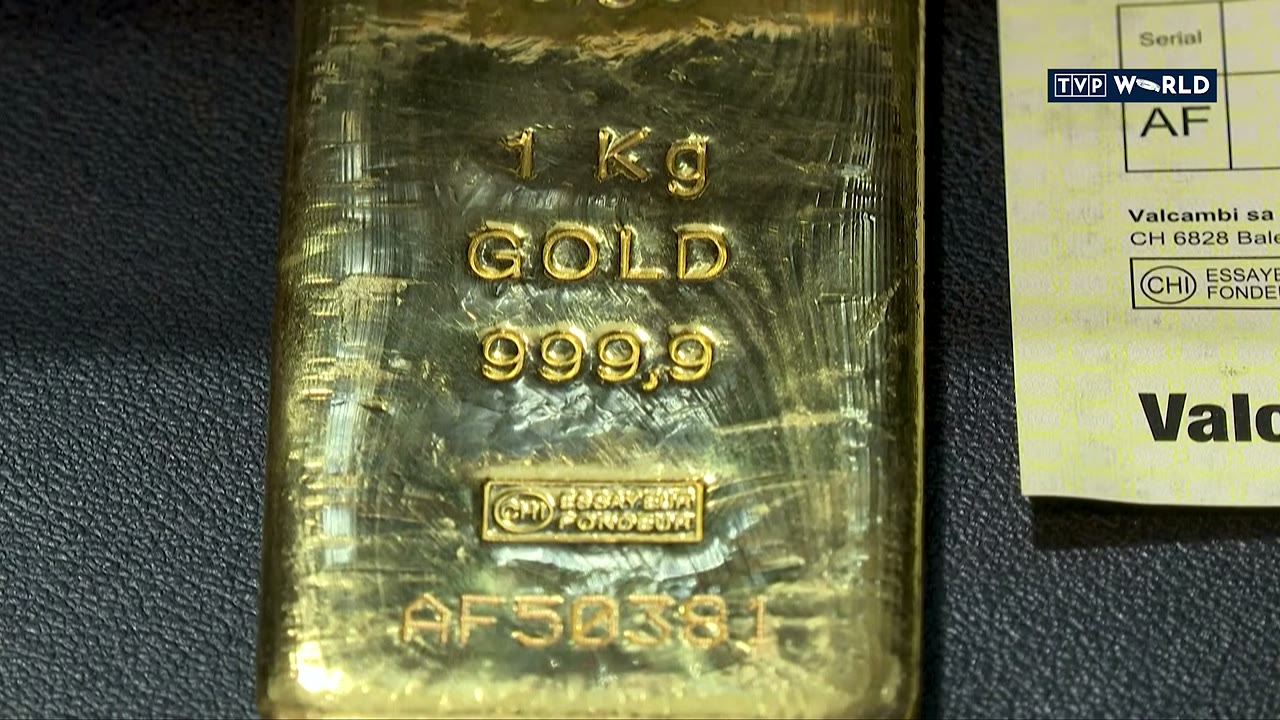
Russia has sharply increased gold exports to Hong Kong and China while reducing its central bank reserves, as Western sanctions block traditional markets. The trade provides Moscow with revenue and a payment workaround, but also enables capital flight and deepens dependence on China.
1Russian Gold Exports to Hong Kong Surge as Reserves Fall
Russia shipped 165 metric tons of gold to Hong Kong from January to September 2026 — more than three times the same period last year, and over 50 times pre-war levels, according to customs data analyzed by Gazprombank.
The shift followed Western restrictions after Russia's full-scale invasion of Ukraine in 2022. The G7 banned imports of Russian gold, and the London Bullion Market Association removed Russian refineries from its accredited supplier list. Exporters redirected supplies to alternative markets.
Hong Kong became a major destination, offering duty-free trade and access to mainland China, which has not imposed similar sanctions on Russian bullion.
At the same time, Russia's Central Bank cut its gold reserves by about 62 tons in the first nine months of 2026. At the end of September, reserves hit their lowest level since 2019 — the largest sustained reduction since the 1998 financial crisis.
Military and security spending is expected to account for around 38% of the federal budget this year.
2How Physical Gold Bypasses Sanctions for Russian Payments
Western sanctions have made international money transfers hard for Russian companies, but physical gold offers another route to receive funds outside Russia.
The process starts when a Russian producer or trading company sells gold to a foreign buyer, perhaps through a hub such as Hong Kong. Once the gold is exported and sold, the seller can be paid in a currency its bank accepts, including Chinese yuan.
That money can potentially pay for imports or foreign suppliers — if banks agree to process the transactions.
China has not imposed broad sanctions on Russian trade like Western countries have. But Chinese banks may reject transactions involving Russian companies because of their own vulnerability to financial restrictions, particularly from the United States.
So even when a Chinese buyer is ready to purchase Russian gold, payment may still hit banking obstacles. Selling bullion abroad does not automatically remove the restrictions.
3Sanctions Shift Russian Gold Trade Routes but Don't Stop It
Before the full-scale invasion, Russia's gold mining industry had a profitable link to Western markets, especially London. The 2022 bans closed an important door — but buyers elsewhere remained.
That is why sanctions can change the geography of trade without destroying the trade itself. Russia keeps mining gold, and producers still have an incentive to sell it.
China has become an increasingly important destination, while the United Arab Emirates also plays a significant trading role.
The sanctions have created a constant enforcement problem: restricting access to Western markets means tracking the companies and intermediaries that help Russian bullion reach other buyers.
Selling a batch of goods to a buyer does not by itself prove a sanctions violation. Different jurisdictions apply different restrictions. The question is which companies processed the gold and where the money ultimately went.
4Gold Enables Capital Flight and Trade Under Sanctions
A willing trading partner is not enough: a company may agree to sell goods to Russia while its bank refuses to process the payment.
In July 2025, Russian financial watchdogs reported to Putin that businesses were using gold, cryptocurrency and alternative payment schemes to support international payments.
But the same metal can serve a completely different purpose for a private owner — moving wealth outside Russia. Export revenues, payment for imports and capital leaving the country can all be tied to gold.
Counting only the shipments sent does not show how much money ultimately goes to the Russian state or supports its war.
That creates tension for Moscow. Gold can help businesses trade under sanctions while giving owners a way to move assets abroad. Growth in export figures can reflect both activities supporting the Russian economy and capital flowing out of it.
5Russia's Gold Strategy Shows Dependence on China and Imported Equipment
Newly mined gold is not the same as gold already held in government reserves. Selling fresh output can generate regular income; using savings covers current expenses while reducing the assets available in the future.
The Rand study describes gold as a strategic military resource, warning that it cannot replace Russian oil exports.
It also points to the mining industry's vulnerability: dependence on imported equipment and services, with growing reliance on China as Western suppliers exit. Finding new customers can support sales, but keeping mines running requires equipment and investment. Buyers solve only part of that problem.
Russia can keep selling gold, use it to support foreign payments and draw on its savings. Those options give Moscow room to maneuver — while leaving it dependent on foreign buyers and suppliers, with China increasingly important on both sides of the deal.
6Expert: Gold Is a Double-Edged Sword for Russia
Gold packs enormous value into a small space, lasts, and can be sold to buyers almost anywhere at any time — properties that make it an effective way to move wealth, said Jędrzejewska, Chair of CFS Europe.
"It is no surprise that Russia is turning to gold as an alternative financial system to facilitate trade and liquidity, as well as a source of revenue," she said.
The same traits suit people who want to make undocumented transactions or transfer wealth out of the country, she said.
Gold is a valuable income source for Russia, a major exporter, helping the Kremlin generate profits used for its war machine, she said. But G7 sanctions have limited Russia's liquidity and ability to trade globally, pushing it toward alternatives — gold among them, alongside virtual assets and cryptocurrency.
Russia is adapting to G7 sanctions by turning to alternatives, some as old as gold.
7China and Hong Kong Benefit as Russian Gold Flows East
As Russian gold is pushed out of the European market, much of it is flowing through Hong Kong — and most of that goes to Chinese investors.
Hong Kong is now a hub for gold trading generally, and China is benefiting, said Jędrzejewska, Chair of CFS Europe.
The G7 sanctions closed the UK, US and EU markets to Russian bullion — markets that had been significant for the trade. Russia had to look for alternatives, and China is now the main end market, she said. Hong Kong buys gold in Russia, stores it, then resells it and facilitates transactions.
Dubai is another trading hub: it buys Russian gold and resells it on global markets.
The G7 sanctions did not impose a global embargo on Russian gold, she stressed. They only changed the geography of trade and the routes.
8Russia Sells Off Gold Reserves as Economy Militarizes
Russia's National Welfare Fund has sold off a large share of its gold: it used to hold about 400 tons, and the figure has dropped to just above 100 tons — almost 300 tons gone.
The Central Bank of Russia was not very active in selling gold until 2026, when almost 50 tons were sold, said Jędrzejewska, Chair of CFS Europe.
Assessing the Russian economy is difficult for Western experts, she said, but the available data shows difficulties. It has turned into a military economy, with resources focused on producing goods for the army — a heavy burden on the population and on Russian business.
The economy is becoming increasingly centralized and has to fall back on reserves, including the central bank's gold, she said. "They are actually looking for money to fund their war machine wherever they can."
9Kremlin Desperate for Cash, Selling Gold at High Prices
Gold prices worldwide have doubled since Russia's full-scale invasion of Ukraine and more than tripled over the past decade — making the Kremlin's reserves a tempting asset to sell.
The Central Bank of Russia still holds over 2,000 tons, so 50 tons is not much in percentage terms, but it is a large amount of monetary gold from a single source, said Jędrzejewska, Chair of CFS Europe.
"The Kremlin is in desperate need of money," she said. Euroclear in Brussels holds central bank assets Russia cannot access, and the economy is suffering, so Moscow is selling national wealth, including gold.
She called it not a smart geopolitical move, noting governments such as Poland's have sought to buy more gold for financial stability.
10Russian Citizens Buy Gold to Move Wealth Abroad
Some Russian investors bought gold in recent years and then simply took it out of the country, beyond the reach of Russian authorities.
That is part of why gold trading can be a double-edged sword for Russia: it enables transactions that would otherwise be impossible, but it also lets wealth leave.
Russian citizens buying gold and carrying it to safe havens in other jurisdictions shows how dire the situation is, said Jędrzejewska, Chair of CFS Europe. They want to protect themselves from the financial consequences of a collapsing economy, she said.
Gold is reliable and easy to move — you can put it in a suitcase and take it to another jurisdiction, or store it in Hong Kong or Dubai, with easy access to something of great value.
11Gold Remelting Obscures Russian Origin, Aiding Sanctions Evasion
Russia is melting down its gold bars to erase the hallmarks that reveal where they came from. That physical scrubbing of origin is becoming more frequent, and it is one more route around G7 sanctions on Russian gold.
Kateryna Dvorchak, the guest discussing the trade, said remelting "makes it impossible to establish its origin, as the physical hallmarks are being removed from the gold bars." With the marks gone, buyers must lean on reliable supply chain records instead of the metal itself.
Russia still mines gold, and production has crept up in recent years. Sanctions have made it hard for Moscow to reach liquidity, so gold is one of the alternatives the Kremlin uses to get money.
Dvorchak argued the G7 financial sanctions are effective, and the hunt for workarounds shows it. Gold can move in a suitcase, unlike a bank transfer.