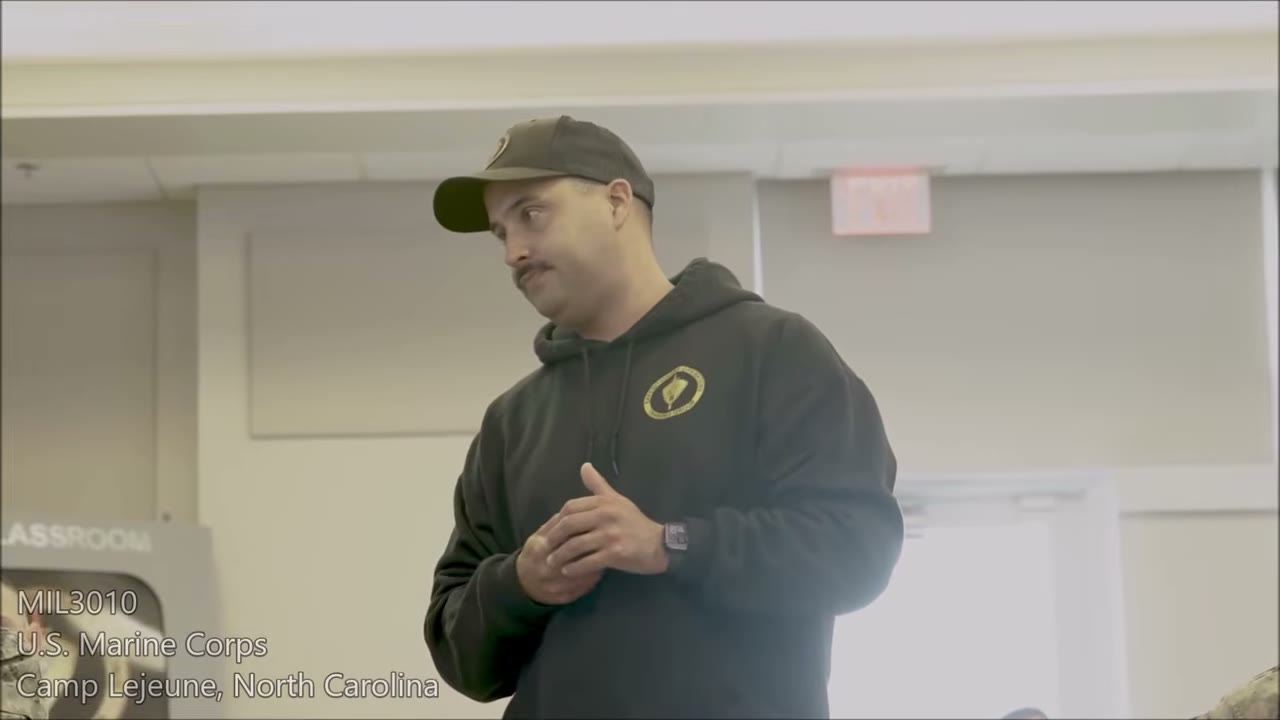
A MIL3010 video shows U.S. Marine Corps fast rope master training at Camp Lejeune, North Carolina. Instructors walk through rope rigging, safety checks, hand signals and hover heights, and brief Marines on their upcoming practical evaluation.
1Instructors Explain Fast Rope Setup and Splice Checks
Marines check every splice before anyone slides down a fast rope. Instructors walked through the setup at Camp Lejeune, starting with the designated area and the aircraft move forward to land.
One instructor stressed the splice check is non-negotiable. Asked why splices matter, the answer came down to how the rope is woven: "One's under. Under One's over, one's under."
A roper then ran the sequence: close the gate, chicken wing, turn around, get the safety check, then the ISO check before sending people down the rope. All it is is steps.
2Marine Walks Through Fast Rope Master Sequence
Chicken wing, turn back, safety check — then the next Marine steps up. A fast rope master ran through the sequence at Camp Lejeune as an instructor called the moves.
After the chicken wing and turn, the guidance belt comes off, and the next master takes over the next step. The goal is a clean slide, done fairly quick, before working the next roper in.
The instructor's feedback was blunt and repeated: "that's good good good good." Then: cut.
3Instructor Stresses Steady Signals and One-Chance Rope Control
You get one chance — so the signals stay steady. An instructor told ropers not to wave frantically on the fast rope, warning against a rapid, frantic motion.
Instead, the roper does just steady waves, kept off to the side rather than on the backside. Arms go up, and the rope gets pulled so the roper moves that way.
With the requirements done, the next phase was set to begin.
4Hover Heights Set for Single and Double Ply Rope Drops
Hover height for the ply more is 40 feet. For the double ply more, instructors keep it at tower height instead.
The brief covered what happens if a roper is unable to move on, and the role of an instructor master and the roper themselves. Then the plan shifts to play time.
That portion was for the masters, the instructor said, before moving on.
5Instructors Discuss Timing and Target Failures in Rope Ops
A couple more minutes could buy a roper a second look. Instructors discussed what happens when a roper fails to target — and said the extra time might let them see whether it's a viable option.
Any time in that window matters, one said. With that, the discussion wrapped: "So I think that's it."
6Marines Briefed on Friday Evaluation as Fast Rope Masters
Friday's evaluation puts Marines in the seats. As master, each gets a rig dog, and the procedures stay the same: weight the gunner's belt, chicken wing.
The UH-1 crew to UH-1 crew will get different counts, the brief said.
Questions, comments, concerns came first — then the Friday plan.
7UH-1 Crews Get Different Counts and Skimming Maneuver Practice
UH-1 crews will get different counts. The brief moved to the eight skimming maneuver, where the roper has to clean it a little bit smoother.
Two were already briefed, an instructor said. Then came the call: who's up?
8Low Hover Height Explained by UH-1's Smaller Rotor Wash
Hovers drop to about 25 to 30 feet on the UH-1 — relatively low, and for a simple reason. Its rotor wash is substantially minor compared with other aircraft, an instructor said.
The squad leader was up next as the brief moved on.
9Instructor Covers Rope Damage, Coordinates and Crew Chief Signals
Rope can come unraveled and get fuzzy. An instructor said if it does get damaged, you should just be able to unwrap the whole thing.
The brief also covered coordinates — 800 Delta Delta 76050 30344 — and altitude zone zero. The core man sits inside the stick, roughly in the middle, and the crew chief tells the master when it's good to drop the rope.
Hand and arm signals continue until the roper gets on the deck.