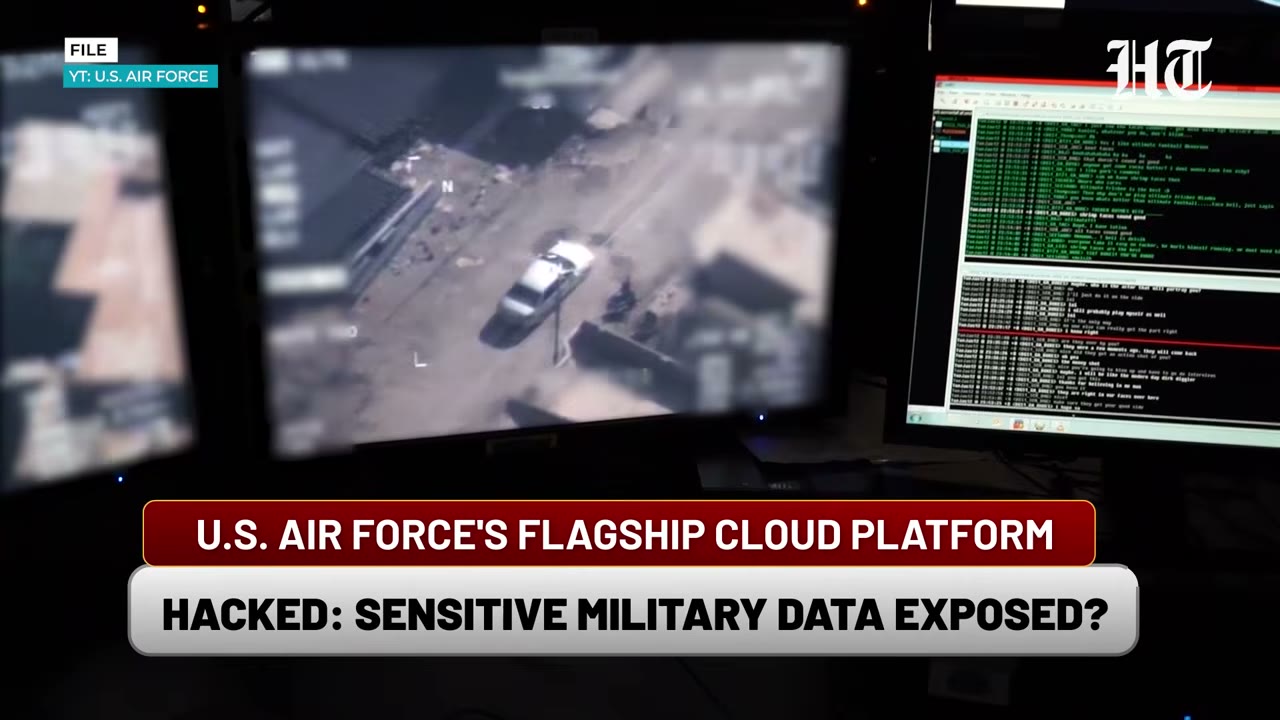
Reuters reports hackers breached the US Air Force's Cloud One platform, potentially exposing personnel and logistics data, while a separate intrusion hit an unclassified CIA system used by three intelligence agencies. The incidents add to mounting concerns over US government cybersecurity after reported breaches at the FBI and NSA.
1Hackers Breach US Air Force Cloud One Platform
Hackers reportedly breached the US Air Force's flagship cloud platform, Cloud One, potentially exposing sensitive military data. The platform supports critical operations across more than 200 US Air Force bases worldwide.
According to a Reuters report, the breach may have exposed personnel records and logistics data. Investigators say hackers exploited a software vulnerability to access the Cloud One control plane system, which manages aircraft operations and military logistics networks globally.
Cloud One's technology partners include Microsoft, Amazon, Oracle, and Alphabet. The platform connects data, applications, and operational systems, and supports air defense radars and global munitions tracking.
Reuters reports the breach was discovered during routine system maintenance within the past month. US Cyber Command has reportedly been called in to assess the damage and determine the full scope of the intrusion.
The incident disrupted operations, forcing the Air Force to put planned system migrations on hold and suspend updates to applications already running on Cloud One.
2Unclassified CIA System Breached, Three Intelligence Agencies Affected
An unclassified CIA system was breached, exposing unclassified information held by at least three US intelligence agencies. The New York Times reported the breach on November 24th.
The CIA, the National Geospatial Intelligence Agency, and the Office of the Director of National Intelligence were affected. Officials said classified material was not exposed, but investigators are still determining exactly what data was accessed.
The breach targeted an open source intelligence system used by analysts to examine publicly available information, such as social media posts, satellite imagery, and public records. Combining such data can reveal sensitive patterns.
Investigators believe hackers may have used an AI-powered cybersecurity tool called Artex, released in July by Chinese engineers. Originally designed to strengthen cyber defenses, it has since been adapted for offensive operations and linked to breaches in Japan and South Korea.
Initial indicators reportedly point towards a possible China connection, though those responsible have not been identified. Western officials have repeatedly accused China of targeting US government agencies and businesses through espionage and cyber operations.
3FBI's National Crime Information Center Reportedly Hacked
President Trump confirmed last week that the FBI's National Crime Information Center had been hacked, putting another major government database under scrutiny. CNN reported that unidentified hackers appeared to have breached the system.
The NCIC connects federal, state, and local law enforcement agencies. Officers use it to check warrants, identify wanted people, and access criminal justice information. Reports did not identify who was responsible or how much data, if any, was stolen.
A former FBI official told CNN that tampering with NCIC records could put officers and the public at risk. On November 21st, Trump called the breach "not good" and revisited the FBI's investigation into Russian interference in the 2016 election.
The report followed a November 13th nationwide ground stop that disrupted more than 18,000 flights. The FAA said it found no indication the ground stop resulted from a cyber attack, and the White House said earlier outages were not a coordinated foreign attack.
Separately, the NSA's internal communications network experienced an outage, and in September the hacking group Shiny Hunters breached an FBI jobs website, compromising personal data of current and former employees.