BBC's The President's Path reports from North Carolina and Ohio, where voters cite gas prices, housing costs and inflation ahead of the midterms. The podcast examines whether anger over affordability and Trump's policies could cost Republicans seats and reshape swing-state voting.
1Podcast hits the road as midterm election day nears
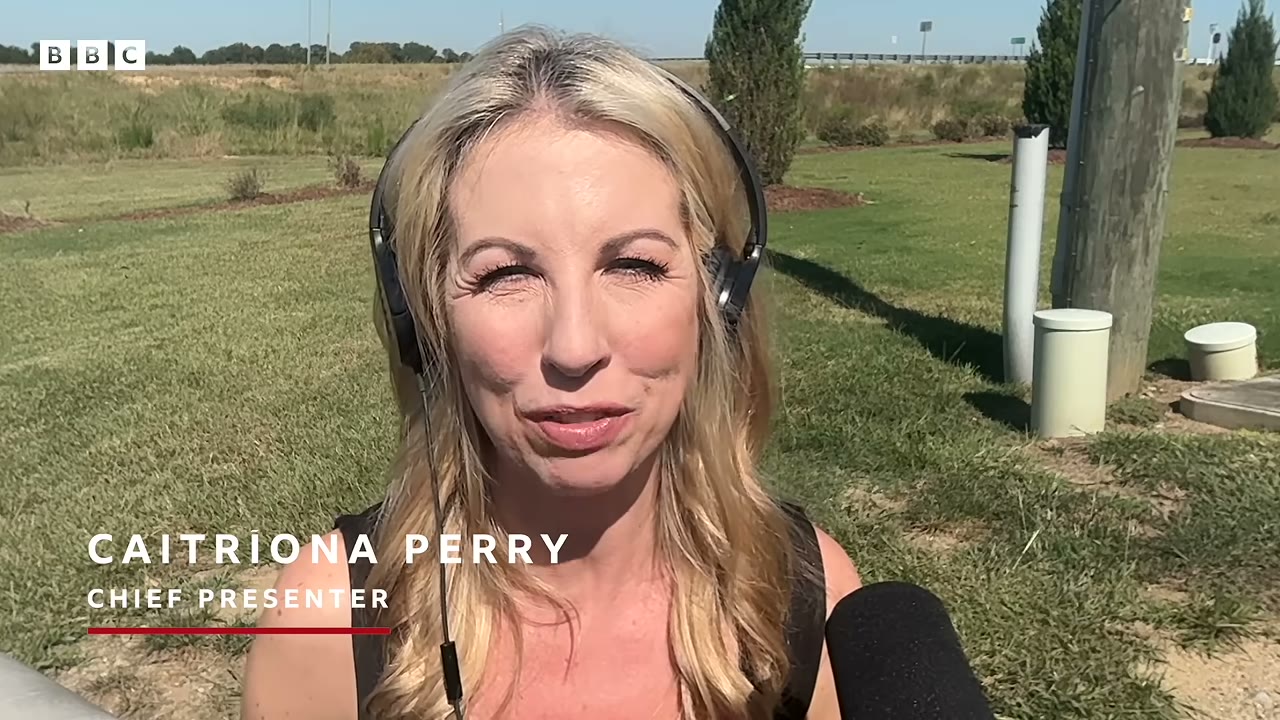
The President's Path podcast has taken to the road, broadcasting from a truck stop on the side of a North Carolina highway as election day nears. Reporters are crisscrossing the state to take the temperature of the nation, and the team says the picture is getting more interesting by the day. The road trips are meant to bring listeners and viewers insights from voters themselves — how people are actually feeling as they prepare to cast ballots.
2Voters' roadside worries clash with White House economic messaging
Voters by the side of a road in North Carolina sound nothing like the policy debates coming out of the Oval Office. One reporter, just back from Ohio, said the debates differ sharply in different parts of the country — with huge implications for the midterms. Conversations with voters in the states feel "more real and immediate" than the talk from the president or members of Congress on Capitol Hill, the reporter said. Everything out at the truck stop, the team agreed, feels much more immediate.
3Polls now match voter discontent with Trump and Republican candidates
Polls showing President Trump and Republican candidates struggling are finally matching what reporters hear from voters. In past cycles, it was the opposite: polls looked bad for Trump, but people out and about said they loved him and his work. This time, the bad poll numbers are borne out in conversations on the ground — though the reporter stressed it is not scientific. At a North Carolina truck stop, one voter's complaint was simple: the price of gas is really high.
4North Carolina suspends gas tax as prices strain drivers
North Carolina has wiped out its gas tax for a few months, knocking 41 cents off every gallon. The statewide measure, passed in the last few days, is not a federal move — but it shows how acute the affordability question has become. The reporter noted knock-on effects, since the tax take comes out of state coffers. Still, affordability had reached a place where it was unmanageable for so many people.
5Independents dominate North Carolina as Republicans pull Senate funding
Unaffiliated voters are the biggest group in North Carolina — 39% say they are independent, against about 30% Republican and 29% Democrat. That math helps explain why the Republican Party pulled funding from its Senate candidate, Michael Whatley. On the ground, the reporter said there is very little love for Republican candidates right now.
6Ohio voters and students worry about jobs, diesel and housing costs
A young Republican at Ohio State University summed up what young conservatives are asking: after graduation, will there be a job — and can you eventually buy a house? The student spoke at a voter roundtable in central Ohio, where the reporter also watched diesel prices and the trucks on the road. Another voter with college-age children called it a central theme for them. The reporter wondered whether it cuts across age ranges, as people feel worse and worse about the economy.
7Gas price jump blamed on White House hurts Republican candidates
At a North Carolina truck stop, unleaded gas reads $3.79 a gallon — with the 41-cent state tax cut already taken off. Diesel is $5.81. The reporter called the gas price jump a self-inflicted wound from the White House that has trickled down to races across the states, pointing to prices of roughly 98 cents a gallon in February versus now. Wages haven't jumped by the same percentage, and Republican candidates are having to deal with it directly.
8North Carolina's housing crunch becomes the state's top issue
Housing is the big issue in North Carolina — both its cost and its supply. Lots of people have moved to the state for its beaches, barbecues and mountains, and there simply isn't enough affordable housing for all of them. Famous universities send out students who then ask where they go and what their future holds. The reporter asked whether that future looks bleak — and whether it is best served by the Republican Party.
9Voters link high gas prices to Trump's war with Iran
Voters are drawing a direct line between rising gas prices and the war in Iran — and treating it as a deliberate move by the administration. The reporter said people associate that presidential policy with Donald Trump as leader of the Republican Party. For some voters, the rest of the party could pay the price.
10Surging inflation undercuts Trump's claim that the economy is strong
Wholesale inflation surged in September, undermining President Trump's message that the economy is doing great and inflation is only a little bit high. The numbers don't match that, the reporter said. Inflation ran upwards of 9% during and after the Covid pandemic under the Biden administration, came back down by the start of Trump's second term, and is now ticking up again. Voters feel the dissonance as a lived experience — a problem for candidates representing his party, since Trump is not on the ballot.
11Republican candidates caught between voters' pain and Trump's optimism
Republican candidates face an awkward bind: at town halls, they can't tell voters affordability issues don't exist when the people in front of them are living them. President Trump can promise the price of gas will come down very soon — he says it all the time — but it hasn't. The reporter said a lot of people's patience with that promise has worn very, very thin.
12Affordability eclipses immigration as North Carolina's election topic
Immigration, a big topic in North Carolina in 2024, barely rates as an election issue this year. Affordability has overshadowed it, the reporter said — even in a state with a pretty large immigrant population. The housing debate here is about where people will live and how it gets funded, not about whether people should be here in the first place.
13North Carolina redistricting may backfire on Republicans
A redistricting effort that Democrats said would cost Congressman Don Davis his seat may be backfiring on Republicans. Davis, a Black man representing North Carolina's first congressional district, looks set to hang on, the reporter said, going by polls and conversations with voters. Republicans may even lose a seat in a so-called safe House district next door. The gerrymandering question, though, just isn't an issue — affordability is, along with voters not wanting Republican representation at all as punishment for the president.
14Trump's 2024 gains with Hispanic and young voters erode
Donald Trump won a record share of Hispanic voters in 2024. Polling now suggests they are turning against him over the economy and aggressive immigration enforcement, according to the BBC's analysis.
The same warning applies to young men, a group that helped sweep Trump back into power. They are now asking what is left for them in this economy, and what job they can get.
One promise in particular is under scrutiny: no wars. "And now we're at war with Iran," the podcast noted, raising the question of whether these voters stay home or back a Democrat.
The coming weeks will show whether that drift holds. For the president's party, the signs are described as troubling.
15Enthusiasm gap favors Roy Cooper over Michael Whatley in North Carolina
In North Carolina, Roy Cooper's supporters are turning out because they want to vote for him. Many of Michael Whatley's are voting only because they don't want Cooper.
That enthusiasm gap showed up in a poll read on the podcast. It suggests motivation on one side of the race runs deeper than on the other.
The question is whether that pattern repeats across the country. If it does, some voters may simply stay home rather than pick between options they dislike.
That gap, the podcast suggested, could be one of the things that swings people either way.
16Economy outweighs social issues and foreign policy for swing voters
For the big swing voter groups, the economy matters more than anything. That is what moves them, according to the podcast's reading of recent elections.
Social issues do not swing these groups, it said. Neither does foreign policy, and not necessarily immigration.
What counts is "purely the, the economics of life," the podcast said.
The finding helps explain the shift among Hispanic and young voters away from Trump. Their focus is on affordability and jobs, not culture-war fights.
17North Carolina's bathroom culture war fades from campaign
North Carolina once sat at the center of a national fight over gender-neutral bathrooms. The law passed there became a huge culture-war issue, and it happened while Roy Cooper was governor.
That fight is no longer being discussed at all in the current campaign, according to the podcast.
Instead, the conversation has moved to affordability.
The contrast shows how far the political ground has shifted in the state, where a law that once dominated headlines now barely registers.
18Trump campaigns in unusual states including Alaska for Dan Sullivan
President Trump traveled all the way to Alaska to stump for Dan Sullivan, a Republican incumbent who appears to be in a bit of trouble.
Trump acknowledged the distance himself, saying it was a very far way for him to go.
A president spending time in Alaska this close to polling day is unusual, and the podcast described it as unheard of there and in most of the places he has been visiting.
The trip signals trouble for Republican incumbents. In Arizona this week, the question was which demographic Trump was trying to target.
19Crime messaging fails to resonate for Republican candidates
Michael Whatley has portrayed Roy Cooper as soft on crime, and he has the endorsement of police unions. The attack is not sticking the way it did for Trump in the presidential election.
In 2024, Trump spoke about crime and public safety quite a lot in North Carolina. That message landed then.
Now, the podcast said, it is not resonating the same way. North Carolina is described as an excellent case study.
The shift, it said, shows how much things have moved on politically in the country broadly.
20Ohio could swing back to purple, reshaping future elections
Ohio has turned deep red, but one voter there predicts it will swing back to purple.
The state used to be a battleground, and it voted for Barack Obama. That has changed.
The voter described Ohio's past as having a more left-wing movement than a right-wing one, and said the state is now more in the center. "That's where our state is going to end up," he said.
If he is right, a midterm election and possibly the next presidential race could significantly change voting patterns for years and redefine what counts as a swing state.
21Split tickets and 2028 ambitions loom over midterm results
A spectacular night for Democrats in North Carolina could leave them with a pile of House and Senate incumbents heading into 2028.
That prospect has Democrats thinking ahead of themselves, with talk of a tremendous victory in 2028.
The results will also show how many voters split their tickets, and the podcast expects a lot of it.
Republicans are working hard to keep whatever gap they have resigned themselves to as small as possible.