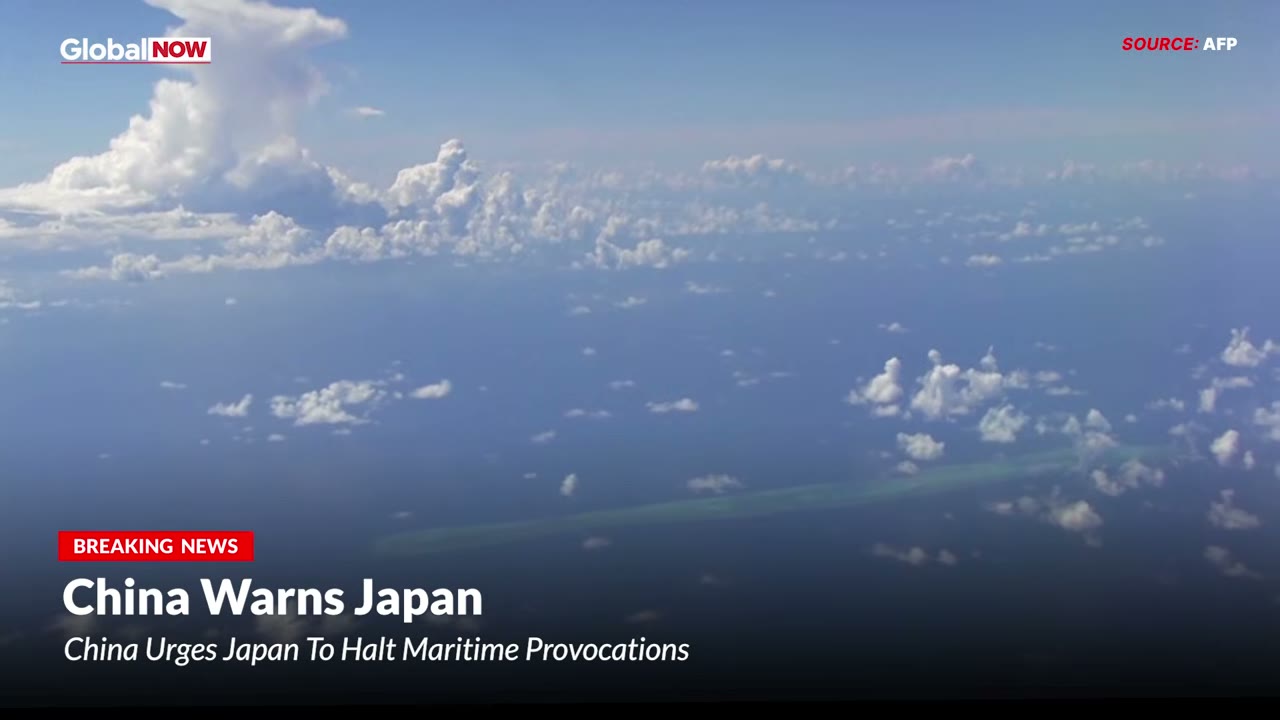
A naval standoff near the disputed Diaoyu/Senkaku islands has reignited tensions between China and Japan, with Beijing issuing a formal protest and Tokyo offering a conflicting account. The incident adds to strains over Taiwan, defense policy and regional security.
1China Warns Japan After Naval Standoff Near Disputed East China Sea Islands
China has accused Japan of sending ships into waters it claims near disputed East China Sea islands and lodged a formal protest with Tokyo.
Chinese Foreign Ministry spokesman Guo Jiakun said on November 26, 2026, that the Diaoyu and adjacent islands "have always been part of China's territory." Beijing says Japanese vessels entered the waters and that Chinese maritime authorities took retaliatory measures.
Guo rejected Japan's accusations against the Chinese Coast Guard and called on Tokyo to stop what Beijing calls unlawful actions and provocations. The islands, known as Senkaku in Japan, have been contested for decades.
China wants Japan to respect previous diplomatic agreements and prevent similar incidents.
2Japan's Coast Guard Gives Conflicting Account of the Standoff
Japan's Coast Guard says two Chinese vessels entered waters around the disputed islands on Thursday morning and tried to approach a Japanese fishing boat.
Japanese patrol vessels repeatedly demanded the Chinese ships leave waters Tokyo considers its own territory. Japan says its coast guard was carrying out legitimate duties to protect maritime safety and Japanese fishermen.
The Coast Guard says this was the fifth recorded incident in 2026 of a Chinese vessel approaching a Japanese fishing boat near the islands.
The competing accounts show how differently Beijing and Tokyo interpret the same maritime activity.
3Standoff Highlights Fragile Security Around the Islands
No shots were fired, but the latest standoff produced dueling diplomatic accusations and underscored how fragile security around the islands has become.
Both governments insist their coast guards act legally and accuse the other side of violating territorial sovereignty.
The exchange of accusations, rather than armed conflict, is what makes the incident notable. The timing adds to the tension: relations between Beijing and Tokyo were already under pressure.
What happens next depends on whether the two sides can keep the dispute confined to coast guard patrols and diplomatic protests.
4Taiwan Remarks by Japan's Prime Minister Strain Ties With Beijing
Japanese Prime Minister Sanae Takaichi's remarks about Taiwan have kept Beijing's criticism coming for more than a year.
In November 2025, Takaichi said a military confrontation involving Taiwan could, under certain circumstances, threaten Japan's national security. Beijing strongly opposed the comment, arguing Taiwan is China's internal affair and that foreign governments should not interfere.
Relations were already strained by differences over defense policy in the Taiwan region and maritime security.
More than a year later, the dispute still weighs on ties between the two countries.
5Takaichi and Xi Briefly Speak at APEC Summit Without Formal Meeting
Sanae Takaichi and Xi Jinping briefly spoke at the APEC summit in Shenzhen, China, days before the latest maritime incident — but held no official bilateral meeting.
The exchange during the international event gave some hope for a gradual improvement in diplomatic relations. The absence of a formal meeting signaled the difficulties remain.
Speaking at the summit, Takaichi confirmed that Japan's official position on Taiwan remains unchanged and stressed the importance of continued dialogue with China.
The two leaders' brief contact did not resolve the underlying tensions.
6Takaichi Reaffirms Japan's Position on Taiwan Amid Dispute
Prime Minister Sanae Takaichi says Japan's position on Taiwan, as set out in the joint communiqué between Japan and China, has not changed.
Her diplomatic assurance came as relations with Beijing remained strained. The latest confrontation near the disputed islands shows fundamental differences between the two governments are still unresolved.
The islands' location in the East China Sea is what makes the territorial dispute so sensitive.
7Why the Uninhabited Islands Are Strategically Sensitive
The islands at the center of the dispute are uninhabited, small, and sit in the East China Sea between Taiwan and Japan's Okinawa region.
Japan currently administers them. China and Taiwan also claim them. The surrounding waters hold valuable fishing grounds and are considered potentially significant for natural resources.
The location places them in a strategically important maritime environment connecting several major Asian economies. For Japan, administrative control is tied to its broader national security strategy. For China, patrols by government vessels assert sovereignty over territory Beijing says historically belongs to China.
The result: even ordinary fishing operations can turn into international diplomatic disputes.
8Historical Roots of the Dispute From 1895 to the 2012 Purchase
Japan officially annexed the islands in 1895, claiming the territory was not under another country's control at the time. China denies that interpretation and says historical documents prove Chinese origin.
After World War II, the islands came under US administration. In 1972, administrative powers were transferred to Japan as part of the Okinawa return agreements — a transfer that did not settle competing sovereignty claims.
The dispute sharpened in 2012, when the Japanese government purchased three islands from private Japanese owners. Beijing strongly opposed the move, and Chinese ship patrols in the surrounding waters became much more visible.
A similar confrontation occurred in July 2026, with both sides saying they acted against vessels entering waters they claim.
9Risk of Unintentional Escalation Between Coast Guards
The most worrisome risk is not a planned confrontation but an accidental one: coast guard vessels operating close together, where a misunderstanding or unexpected maneuver can turn dangerous fast.
Even without intent to escalate, an incident at sea can pressure political leaders into responding more decisively. Both China and Japan have significant maritime security capabilities and treat territorial sovereignty as a fundamental national interest.
Chinese authorities say they will defend what Beijing considers legitimate maritime rights. Japanese authorities insist their coast guard operations are necessary to protect territorial waters and civilian maritime activity.
Neither government shows signs of giving up its long-standing position.
10China Cites 2014 Agreement and 2023 Defense Hotline
Beijing's latest diplomatic response pointed back to a quadrilateral agreement reached with Japan in November 2014, designed to improve relations and prevent unexpected incidents in the East China Sea.
By citing it, China signals it expects Japan to fulfill previous commitments aimed at resolving differences. Tokyo could equally argue that avoiding collisions requires restraint from Chinese vessels near the islands.
In 2023, the two countries also set up a defense communications hotline to improve direct communication and reduce the likelihood of unintended military incidents.
Such mechanisms matter as diplomatic communication grows more complex — direct contact could clear up misunderstandings before a maritime clash widens into a broader security crisis.
11Japan's Defense Buildup and Ties With US and Philippines Draw Beijing's Ire
On the same day as the East China Sea incident, China's Defense Ministry criticized Japan's growing security cooperation with the Philippines, saying the differences go beyond the disputed islands.
Japan is strengthening its defense capabilities and expanding security cooperation with regional partners, including the United States and the Philippines. Beijing argues certain Japanese defense initiatives could contribute to greater regional instability.
Tokyo insists its security policy aims to respond to an increasingly complex strategic environment.
For neighboring countries, stability in the East China Sea remains important as the broader Indo-Pacific security picture shifts.
12Economic Stakes as Asia's Two Largest Economies Face Off
China and Japan are Asia's two largest economies with extensive commercial ties — a strong reason for both to avoid serious conflict even as their governments trade accusations.
A prolonged deterioration could affect regional diplomacy, maritime trade, investment and economic cooperation.
The latest incident did not confirm that either government is preparing for immediate military escalation. So far, the confrontation is largely limited to coast guard operations, diplomatic protests and conflicting sovereignty claims.
But recurring maritime collisions could make future incidents harder to resolve, especially if communication stays limited. Attention now turns to whether Tokyo and Beijing seek further dialogue or continue on the current path.
13Fishermen and Regional Governments Watch the Standoff Warily
Japanese fishermen now face practical safety concerns working the waters near the contested islands, as China's warning deepens the East China Sea standoff. China's maritime authorities keep patrolling, with constant patrols described as an integral part of Beijing's territorial policy. For regional governments, the main question is whether these differences can be contained without causing wider instability. The transcript does not say what confidence-building measures, if any, are under discussion, or whether surveillance activity will change.
14Xi and Takaichi Face Challenge of Containing the Dispute
China's latest warning shows Beijing will not change its position on the Diaoyu Islands, while Tokyo remains committed to keeping administrative control over the Senkaku Islands. Neither side shows signs of backing down. The challenge facing President Xi Jinping and Prime Minister Sanae Takaichi is how to resolve these conflicting positions and stop the maritime incident from escalating into a much larger diplomatic and security crisis. Tensions over Taiwan, regional defense and territorial sovereignty keep straining bilateral relations, leaving the East China Sea one of the most sensitive areas in the Indo-Pacific.