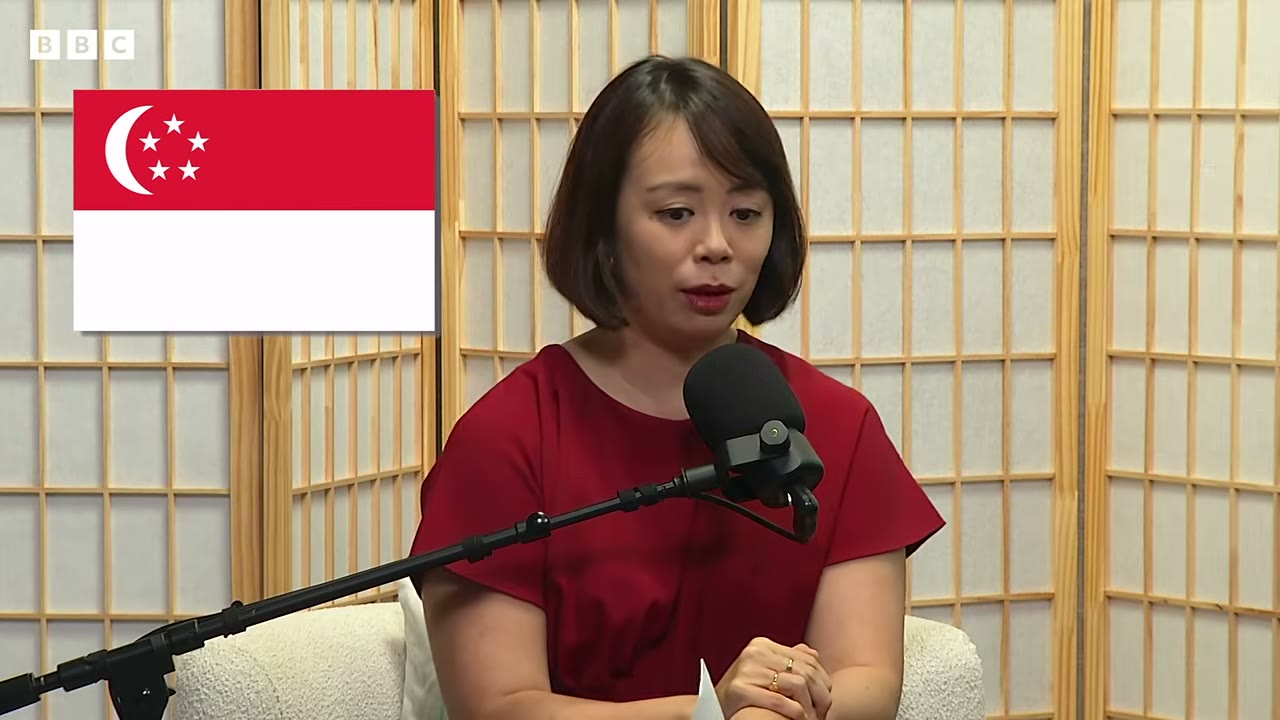
Singapore's prime minister Lawrence Wong is receiving a pay rise from USD 1.7 million to USD 2.85 million, about 50 times the country's median income. A BBC podcast panel examines whether paying politicians more attracts better leaders or fuels public anger, comparing Singapore's model with the UK, Hong Kong and others.
1Singapore PM Lawrence Wong Gets USD 1M Pay Rise, Will Donate It to Charity
Singapore's prime minister is the highest-paid leader in the world — and his salary is about to jump by roughly USD 1 million. Lawrence Wong's pay rises from USD 1.7 million to USD 2.85 million when the increase kicks in this week. He says he will donate the difference to charity for the next five years. The raise still set Singaporeans talking angrily online, because his salary now stands at about 50 times the country's median income. The government's argument is that political salaries must stay competitive with private-sector roles. Singapore has held the top spot on leader pay for quite some time.
2Podcast Panel Asks Whether Higher Politician Pay Delivers Better Results
If you pay politicians more, do you actually get better results? That question sits at the heart of a BBC podcast episode on Asia Pacific politics. Tessa Wong, the BBC's Asia digital reporter, who is from Singapore and covered its politics for years, joined the discussion. So did two researchers who have spent years on the question of how to get the best out of politicians. Nicholas Dickinson, from the University of Sheffield, has researched the most appropriate salary for politicians in the U.K. Kimberly McArthur works for the Better Politics Foundation, a nonpartisan, nonprofit organization based in Germany that has studied politicians' mental health and safety in office.
3Singapore Details Pay Rise for Ministers and Past Public Backlash
The last time Singapore raised ministerial pay, by about 60% in 2007, the ruling party lost voter support at the next election. Now another significant rise is days away. Several cabinet ministers will see increases, with the biggest going to Prime Minister Lawrence Wong: from SGD 2.2 million to SGD 3.6 million, or USD 1.7 million to USD 2.85 million. Wong says he will donate the difference — about USD 1 million — to charity for five years. Then-Prime Minister Lee Hsien Loong raised ministerial salaries by about 60% in 2007, and his party saw a rather big dip in voter percentages at the following election. In about 2012, the government slashed ministerial salaries, and the amounts stayed untouched for years until now.
4Chart Compares World Leaders' Salaries Against Median Incomes
Singapore's leader earns 52 times the country's median income — more than double the ratio of the next leader on the list. A chart of global leaders' salaries, converted to US dollars, puts Lawrence Wong at USD 2.85 million. Hong Kong is second at USD 720,000, followed by Switzerland at about USD 600,000. Australia, the US, Japan and the UK sit between about USD 200,000 and USD 400,000. Singapore's neighbours Malaysia and Indonesia pay their leaders about USD 50,000 to 60,000. Near the bottom: China's Xi Jinping on USD 22,000 and India's Narendra Modi on USD 24,000.
5Why Small City-States Like Singapore and Hong Kong Pay Leaders Most
The biggest countries do not pay their politicians the most — the smallest city-states often do. Nicholas Dickinson, from the University of Sheffield, said Singapore and Hong Kong, both city-states in Asia that are home to some of the highest-paid people in Asia, top the salary list. In both, politicians' pay is designed to reflect that. Singapore's high-pay model is substantially indigenous — a deliberate choice by the state's founders, particularly Lee Kuan Yew, to attract the so-called best people into politics. Hong Kong's is more a legacy of high pay for British colonial officials: when the Hong Kong SAR was created in 1997, it inherited the idea that the city's leaders should be highly paid technocrats along the lines of British civil service leaders.
6Politicians Say Service and Influence, Not Money, Motivate Them
Ask politicians what drives them and money rarely comes up. Kimberly McArthur, of the Better Politics Foundation, says she has surveyed or interviewed around 500 leaders from different countries, including Singapore and the region. Two motivations dominate: the wish to serve, and the wish to influence and make change. Leaders often tell her they would be much better off financially doing something else, given they work 70 hours a week and give up their privacy. Research in the UK, the US and the EU points to the same drivers, she said. Money, she said, does not come up in those conversations.
7Does High Pay Prevent Corruption Among Politicians?
Singapore's argument is that paying politicians more stops them from going corrupt. Kimberly McArthur, of the Better Politics Foundation, said corruption is one aspect to weigh: you don't want to pay so little that there is a temptation to get money in other ways that aren't above board. She stressed that politicians paid lower amounts are not always going to be corrupt. The Singapore argument, she said, is that pegging the salary takes away the incentive to take money in other ways. Pay also shapes who the role attracts. The job is hard, with long hours and heavy public scrutiny — 24/7 in many instances, especially with social media — and decisions affecting large numbers of people. To get the best and the brightest, she said, it makes sense to pay more.
8Singapore's 'Clean Wage' Model and Regional Corruption Perceptions
Singapore calls it the clean wage: a big salary, and nothing else on the side. Unlike many neighbours, the country scores quite highly on anti-corruption indexes compiled by Transparency International, and it pitches its pay model as a response to regional graft problems. Under the clean wage, there are no extras — no paying for politicians' children's schools, rent or homes. They get the salary and that is it. Singapore argues that being transparent and paying highly helps avoid the temptation politicians might face elsewhere. Malaysia and Indonesia pay their leaders about USD 50,000 to 60,000 a year, far less than Lawrence Wong's USD 2.85 million.
9Singaporeans Angry at Pay Rise Amid Record Retrenchments
The pay rise lands as Singaporeans worry about their jobs. Retrenchments have recently hit five-year record levels, Tessa Wong said, and in that atmosphere news of a big raise for political leaders does not sit well with some people. Wong said Singaporeans want to feel they can relate to their politicians, as voters in other democratic systems do. Research shows a dichotomy: citizens want politicians to be very much like them and relatable, yet also better than them — doing a very hard job very well. Many people say they would never go into politics because it is too hard. Wong called it a lose-lose situation: people want politicians to earn the same as them, but also want them paid more so they do a good job.
10UK's Weak Post-Ministerial Jobs Rules Compared With Singapore
Britain's system for policing ministers' post-government jobs is advisory — and that first word matters. Nicholas Dickinson, from the University of Sheffield, said almost all countries impose some restriction on ministers after they leave office, and Singapore is relatively strict: lifetime official secrets protections cover anything learned in government, plus an additional Prevention of Corruption Act. The UK is relatively lax. Its Advisory Commission on Business Appointments, or ACOBA, is meant to enforce the parts of the ministerial code on where ministers can work after leaving office. In practice, Dickinson said, the committee has no formal powers to stop ministers taking particular jobs. That has been the subject of numerous scandals in recent years, he said.
11Study on Appropriate UK Politician Pay Finds Contradictory Evidence
A study of what UK politicians should be paid ended with two studies reaching opposite conclusions. Researchers used the EU Parliament's 2009 pay harmonisation as a natural experiment: members had been paid the same as national legislators, then moved to a common salary, so pay rose in some countries and fell in others.
One study found legislative activity increased on several measures. The other found higher absenteeism and lower re-election rates. Nicholas, a researcher on the UK study, said pay is hard to tie to performance because economies shift anyway.
He added that voters judge results, not process. "People tend not to care about what's going on in their political system," he said. What they want varies: the US values growth, Europe social services and workers' rights.
12Panel Doubts Singapore's High-Pay Model Will Spread Elsewhere
Singapore's high-pay model for politicians is unlikely to spread, a panel suggested. Kim said the system has a uniqueness that other countries cannot easily copy, pointing to falling trust in politics and falling rates of civic education worldwide.
People understand less about what their government and politicians do, she said, so there will not be democratic support for higher salaries. Voters will show dissatisfaction in elections instead.
Another panelist agreed but drew a distinction: Singapore may be an outlier, not an exception. The same debates — pay for the best versus politicians living lives like everyone else's — happen everywhere. Singapore has just reached different conclusions.