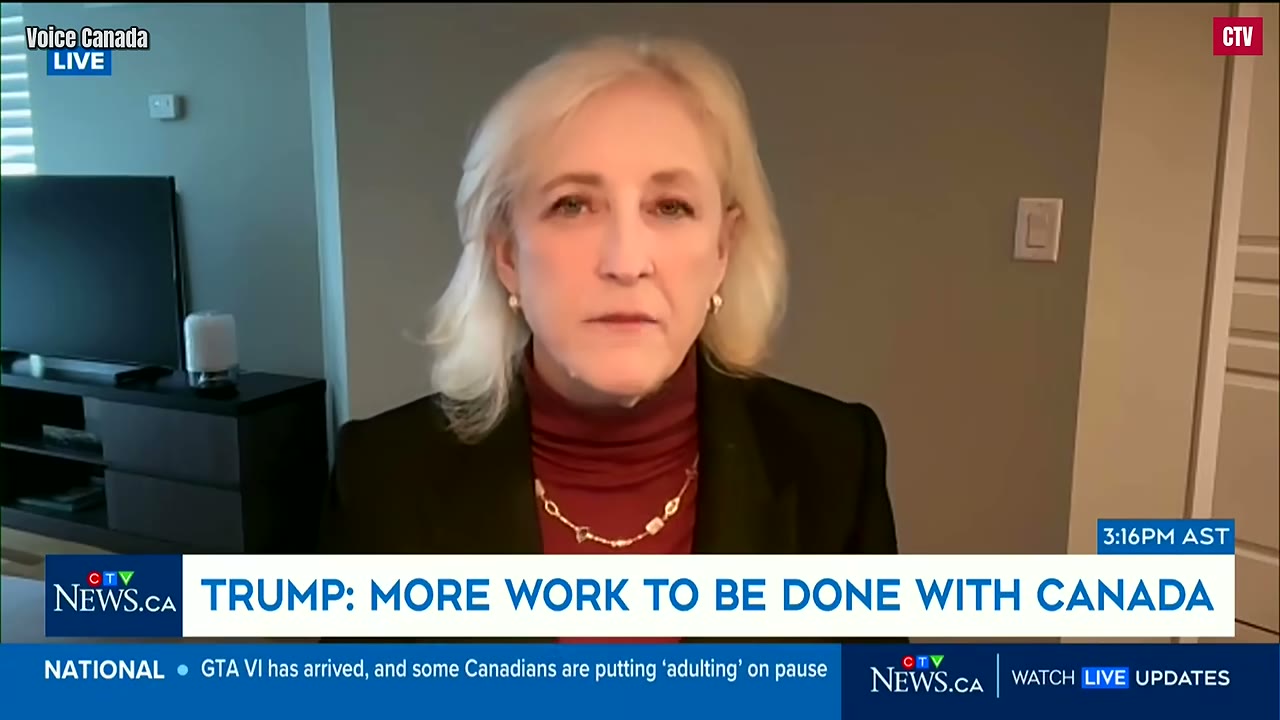
The video examines the state of US-Canada trade talks as President Trump threatens 50% tariffs on vehicles and parts from January 1. It contrasts Trump's claims about Canada with the history of free trade and comments from US officials suggesting a compromise is close.
1Trump Says Canada Has Been Difficult for 50 Years as Trade Talks Continue
Donald Trump says Canada has been "a very difficult country for 50 years" — a claim that sits awkwardly beside decades of free trade between the two neighbours.
Speaking as trade talks continued, Trump said Canada feels "more confident" for some reason and that the US "can't let them feel that way anymore." He said Washington is working toward "a fair agreement" but added: "They never treated us fairly. Never."
He also said the midterm elections did not affect the pace or the content of the negotiations.
The talks are still under way, with no deal announced.
2US Officials Signal Interim Canada Trade Deal as CUSMA History Cited
Washington's top trade official says a compromise with Canada is close, even as the two countries' free-trade history stretches back to January 1, 1989.
US Trade Representative Jameson Greer told Fox News on November 22: "I think we're pretty close to finding a compromise." He added: "We are close."
Global News reports Greer raised the issue of 49,000 Chinese electric cars per year at a lower tariff. Trump personally signed the current CUSMA agreement on January 29, 2020.
One voice in the talks said an interim deal would be accepted and passed on for legislation of a better one later. The pressure is real: there is a limit to the time and money that can be spent before people have to make serious business decisions.
3Trump Threatens 50% Tariffs on Vehicles and Parts From January 1
Trump has threatened 50% tariffs on vehicles and parts starting January 1 — a sweeping duty that would land on Canada's car and steel sectors.
CBC reports there has been no official notification from the US yet. It remains a threat.
"This is a significant increase in the duty on these cars, and we will have to pay more to remain competitive on the other side of the border," one voice said.
Trump also said Prime Minister Trudeau is "very pleasant" and wants to build the Keystone pipeline for the US. "We like it," Trump said.
On the tariff threat, the same voice said: "There will be a tariff. What will it be like and how will it limit our sectors, such as steel and automotive?"
4LeBlanc Says Canada Will Work Into January or February for a Deal
Canada's negotiator says he will keep working into January or February if that is what it takes to reach a deal with the United States.
LeBlanc told CBC that if it takes until January or February, "we will work." He said an interim agreement would likely include some tariffs.
"If they give us what we need, we'll make a deal. If they play games, there will be no deal," he said.
Discussions with the US are continuing both informally and formally, and the channels of communication are open. Canada has also recognized internally that in the long run, it is better to have an agreement than not to have one.
5Analyst Says Democracies Need Time to Recover From Trump's Re-election
Democracies around the world will need a long time to recover from the last two years, an analyst says — and Canada is no exception.
"Canada, and not just Canada, but all democracies around the world, will need a long time to recover from the last two years," the analyst said.
That includes coming to terms with the fact that Americans re-elected Donald Trump, and with the US president's behaviour now and over the past few years.
The analyst also said waiting for Trump's term to end may not be the easiest path when it comes to the impact on the economy.
6Analyst Says Divided Washington Weakens US Leverage Over Canada
Washington does not speak with one voice — and that helps Canada, an analyst says.
On November 20, Trump said Canada has been "very, very difficult for 50 years." The analyst said that does not fit the dates: free trade has been in effect since January 1, 1989, and the agreement Trump himself signed on January 29, 2020.
Rubio talked about moving forward. Greer told Fox News on November 22: "We are close to the goal." Senator Coons says he would agree to a temporary deal.
The analyst called this a real lever of influence and said Canada is right to defend its positions. Coons says some Democrats from steel states may want to keep tariffs on steel and aluminum. LeBlanc argues Democrats are not a panacea.