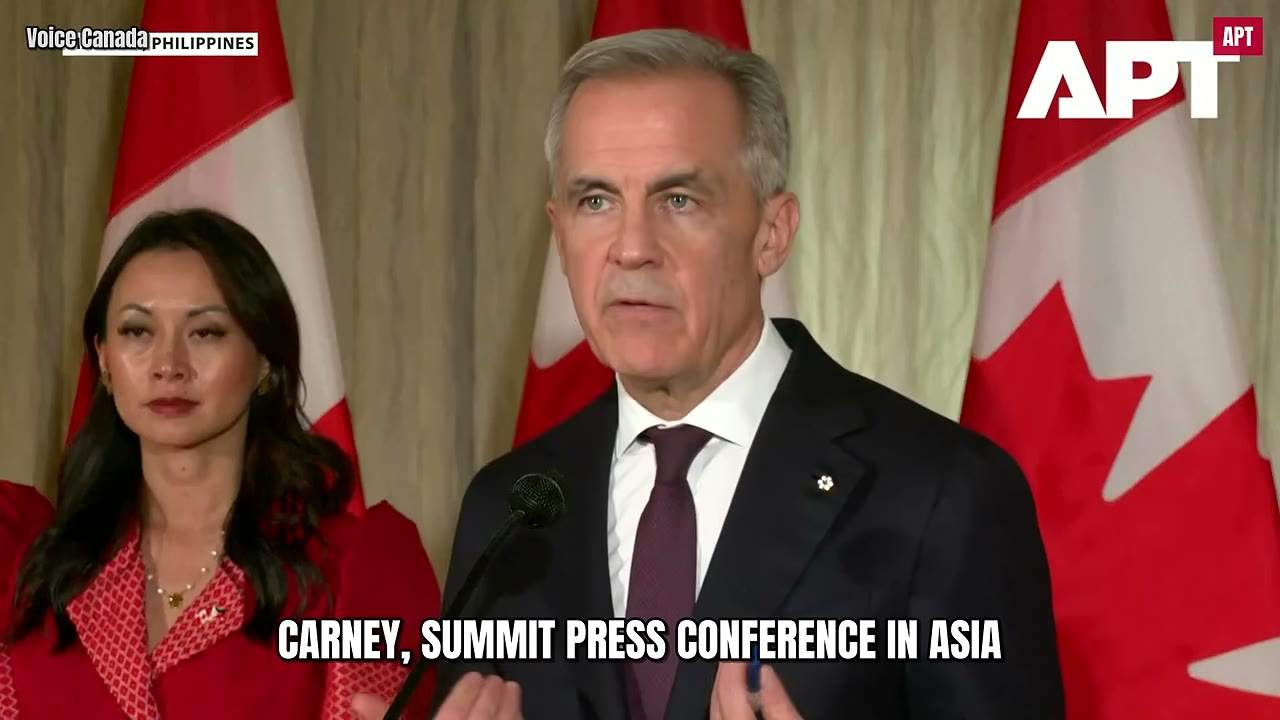
At the Asia Summit press conference, Mark Carney framed Canada as a reliable energy and critical minerals partner as countries seek to avoid strategic dependence. He defended joining a photo with Putin out of protocol and cited sanctions and a sports ban as Canada's response.
1Carney Pitches Canada as Energy and Critical Minerals Partner to Avoid Strategic Dependence
Canada is pitching itself as the answer as countries grow wary of relying on a single supplier. Speaking at the Asia Summit Press Conference, Prime Minister Mark Carney said the world is responding to "the weaponization of integration" and the danger of excessive concentration by seeking partnerships with a wide range of countries.
A reporter told Carney the United States has sown fears about supply instability, from energy to diesel fuel. Carney said there is "a widespread, growing and expanding recognition among many countries of the risks of strategic dependence."
That dependence could cover energy, certain commodities, fertilizer, food, AI or space, he said. One source means one risk, in his framing.
As countries look around for a partner, Carney asked who is a good energy partner, who is the energy superpower, and who can supply critical minerals. His answer each time: Canada. He also cited Canada's intelligence infrastructure, which he said is developing, and said Canada honors its agreements.
What comes next is whether other countries describe supply risks the way he does, and whether partnerships turn into signed contracts.
2Von der Leyen Says EU Imports of Canadian Critical Raw Materials Jumped 62%
Imports of critical Canadian raw materials into the EU jumped 62% in value last year, reaching 3.3 billion euros, or 5.18 billion Canadian dollars. European Commission President Ursula von der Leyen gave the figure in late October.
She also said trade has increased by more than 80% thanks to CETA, the EU-Canada trade agreement.
The numbers land as Carney argues countries are moving away from strategic dependence on single suppliers. Asked whether the shift is strategy or luck, he said it is "100%" strategy.
Carney said Canada is open about building a dense network of connections to make the country resilient, independent and sovereign, so Canadians are not told what to do by "some hegemon or hyperscaler." He did not name the United States.
He said many countries are pursuing similar strategies to varying degrees, and that the two trends converge — one reason for the progress.
The next test is whether the partnership pitch turns into signed agreements, and whether buyers weigh price and distance alongside politics.
3Carney Says He Will Join Putin Photo Out of Protocol, Cites Sanctions and Athlete Ban
Carney will join a family photo with Vladimir Putin, and he says it is about protocol, not politics. Asked by Global News reporter David Ekin whether he would take part, Carney said: "I will participate in the photo shoot out of respect for the host."
He said Canada is in Asia out of respect for the host country and pointed to agreement on protocol.
Pressed on the condemnation of Putin that Canadians expect, Carney repeated that he would join the photo out of respect for the host. He said condemnation of Putin and Russia is reflected in Canada's sanctions policy.
He cited a decision made a week or ten days earlier to ban Russian athletes under the Russian flag, or the flag of Belarus, from competing in sporting events in Canada, as was the case at the World Youth Championships.
Carney said Canada stands firmly on the side of Ukraine, democracy, territorial integrity and the rule of law — which, he said, puts Canada on the other side of Putin's Russia.
4Analysis Questions Whether Carney's Partnership Strategy Is Backed by Signed Deals
Carney's pitch rests on a list — energy, critical minerals, and a country that honors its agreements — but the partnerships themselves are contracts that have not yet been signed. That is the caution raised in analysis of his Asia Summit remarks.
The European figures on critical minerals, von der Leyen's data about Europe, support the minerals part of the pitch, the analysis says. Buyers also weigh price and distance.
On Russia, Carney followed protocol, then pointed to sanctions and an athlete ban.
What to watch: the signed agreements, and whether other countries describe supply risks the way he does. The analysis is presented as interpretation and may be wrong.