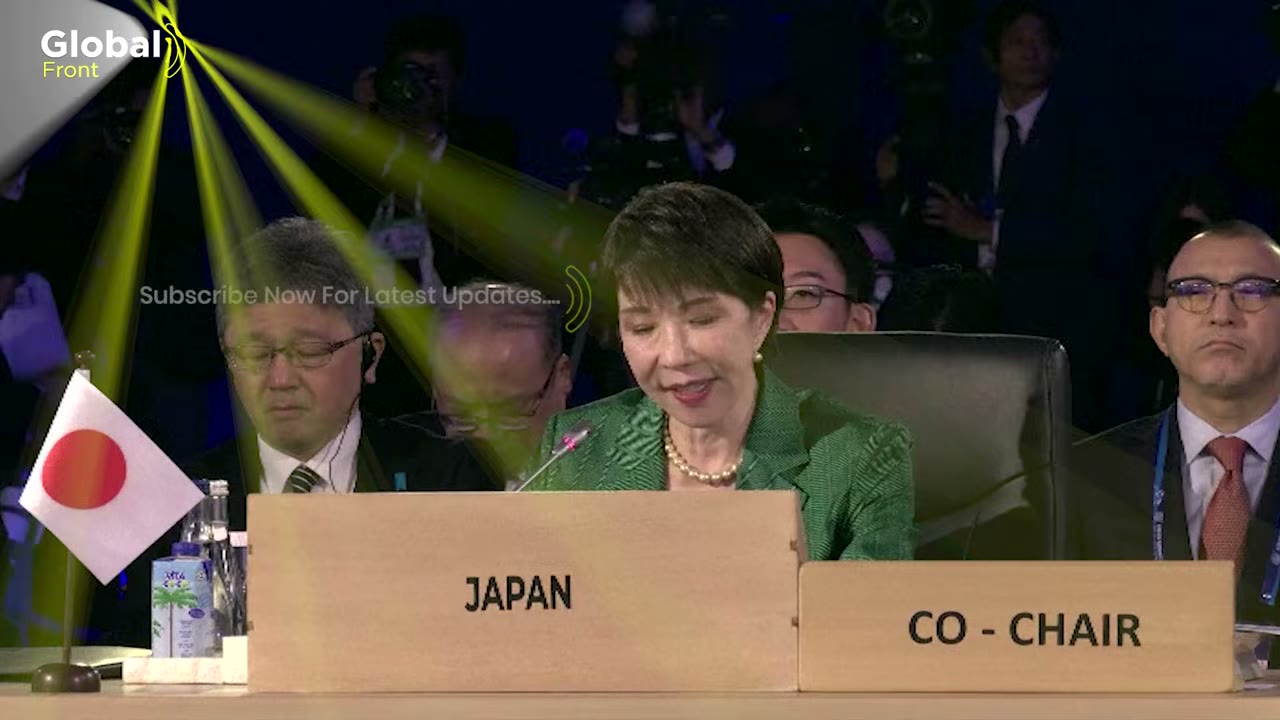
Japanese Prime Minister Sanae Takaichi returned from the Shenzhen APEC summit without resolving tensions with China, while Xi Jinping gave Donald Trump an exceptional welcome and held a historic trilateral meeting with Trump and Vladimir Putin. The contrast raised questions about Japan's diplomatic standing and the economic costs of its Taiwan dispute with Beijing.
1Takaichi Returns From Shenzhen APEC Without Breakthrough in China Ties
Sanae Takaichi flew home from Shenzhen without a breakthrough in Japan's tense relations with China. The APEC summit, held November 18-19, 2026, put Beijing's priorities on display: Xi Jinping gave Donald Trump a grand welcome and held historic talks with Vladimir Putin, while Japan's new prime minister received a far more subdued reception.
The contrast raised questions about Japan's diplomatic position, its economic vulnerability and the future of ties between Tokyo and Beijing.
For Takaichi, the trip was delicate from the start. It was her first visit to China as prime minister, nearly a year after remarks about Taiwan set off a major conflict with Beijing. Tensions have since spread beyond politics into trade and supply chains.
2Airport Receptions Highlight Stark Contrast Between Trump and Takaichi
Xi Jinping personally met Donald Trump at Shenzhen Bao'an International Airport, an unusual gesture that underscored the importance Beijing attached to the US president's visit. The reception featured an elaborate ceremony, military honors and a display of diplomatic hospitality.
Trump praised the welcome, saying it was "a big victory for us. This is also a big victory for China."
Other leaders got their own flourishes: Australia's Anthony Albanese received flowers; Philippine President Ferdinand Marcos Jr. was greeted with a cultural performance.
Takaichi's arrival was different. A Chinese Foreign Ministry protocol representative met her, they exchanged a formal handshake, walked the red carpet and got into a waiting car. No dancers, no lavish celebrations, no personal greeting from Xi.
Japanese officials rejected suggestions their prime minister was deliberately ignored. Still, footage of the subdued reception fed a wider debate over whether Beijing was signaling displeasure with Japan's stance on Taiwan.
3Taiwan Remarks From November 2025 Spark China-Japan Dispute
The dispute between Tokyo and Beijing dates back to November 2025, when Sanae Takaichi suggested that China's military operation against Taiwan could create conditions requiring a response from Japan if its survival were threatened.
Beijing strongly opposed the remarks, viewing them as interference in what China considers Taiwan's internal affairs.
Japan has insisted its security concerns are legitimate, particularly because of Taiwan's proximity to Japanese territory and the importance of regional stability.
4China Restricts Critical Mineral Exports and Seafood Imports to Japan
China has restricted exports of critical minerals to Japanese manufacturers, raising concerns in industries including automotive, electronics, high-tech and aerospace. Restrictions on Japanese seafood imports and official warnings against travel to Japan have added more pressure.
The measures highlight the difficulty Japan faces in balancing its economic dependence on China with its partnership with the United States.
China remains one of Japan's most important trading partners, so prolonged diplomatic tensions are particularly costly.
5Takaichi Meets Xi Briefly at Banquet but No Formal Bilateral Talks
Takaichi finally met Xi Jinping at a welcome banquet on Wednesday night — alongside his wife, Peng Liyuan. The Japanese leader exchanged handshakes and greetings with both before posing for an official photo.
A second brief meeting came during the leaders' gathering on Thursday.
Neither contact developed into an official bilateral meeting. No talks aimed at resolving differences over Taiwan have been announced, and there has been no sign either government has changed its position.
6Takaichi Describes Xi Greetings With Restraint at Final Press Conference
Takaichi described her limited contact with Xi Jinping in careful terms at her final press conference. "During yesterday's banquet and today's leaders' session, I was greeted by President Xi Jinping, we shook hands and exchanged greetings," she said.
She explained that she thanked Xi for the invitation and for the organization carried out during the summit.
Her remarks emphasized diplomatic courtesy rather than any substantive improvement in bilateral relations. The lack of formal talks stood out, as other key leaders had opportunities for more substantive discussions with the Chinese president. For Japan, two handshakes meant maintaining contact — not the kind of diplomatic progress that could reduce uncertainty.
7Takaichi Holds First Japan-Russia Leader Meeting in Seven Years With Putin
Takaichi held a conversation lasting more than 30 minutes with Vladimir Putin — the first face-to-face meeting between Japanese and Russian leaders in seven years.
The talk came after a welcome banquet on Wednesday and touched on unresolved disputes between Tokyo and Moscow. Takaichi raised concern about a Japanese journalist detained in Russia on suspicion of espionage, and about the treatment of Japanese business after Moscow placed Russian assets owned by Japan Tobacco under temporary management.
The relationship is burdened by Russia's war in Ukraine, long-standing territorial disputes and recent security incidents. No immediate resolution came, but the two agreed to keep talking. "We have reached an agreement to maintain communication at various levels, including direct contacts between the president and me," Takaichi said.
For Japan, resuming direct communication with Putin was a limited but significant step — a channel for raising sensitive issues, without hinting at resolving deeper differences.
8Takaichi and Trump Briefly Discuss Indo-Pacific Security Coordination
Takaichi also spoke briefly with Donald Trump during the summit. According to her, the leaders exchanged views and confirmed their intention to closely coordinate actions on security and regional affairs in the Indo-Pacific region.
The connection mattered because Trump was simultaneously seeking direct interaction with Xi Jinping and Vladimir Putin.
Japan is heavily dependent on its security alliance with Washington, so any change in US relations with China or Russia is of concern in Tokyo.
9Trump, Xi and Putin Hold Unprecedented Trilateral Summit at Kailan Villa
Trump, Xi Jinping and Vladimir Putin met at the Kailan Villa in Shenzhen for an unprecedented trilateral summit — the leaders of the world's three most powerful nuclear powers, at a time of serious international tension over Ukraine, Iran, trade restrictions and nuclear arms control.
Trump called the meeting historic. "We are truly making history," he said, stressing that diplomatic interaction is necessary even between countries with deep differences. Xi said: "History teaches us that when great powers live in harmony, peace reigns in the world. When great powers conflict, the world descends into chaos."
The three issued a peace declaration reaffirming that nuclear war must never be started, and addressing UN reform, energy supplies and the protection of government officials under international law.
The declaration contained few specific commitments, launched no new nuclear arms control negotiations and resolved none of the main disputes over Ukraine and Iran. Still, it let Xi present China as a central diplomatic force able to bring Washington and Moscow closer.
For Japan, the symbolism was more complex: its closest security ally was in direct dialogue with two states whose actions concern Japanese policymakers.
10Takaichi Says Japan Will Protect Interests Amid US-Russia-China Talks
Asked about the Trump-Xi-Putin summit, Takaichi said Japan would coordinate with the United States and other partners while protecting its own national interests. She rejected the suggestion that Japan would necessarily suffer from these negotiations.
Takaichi also used her Asian diplomatic tour to strengthen relations outside China.
11Takaichi Meets Quad Partners in Manila on Indo-Pacific Security
In Manila, Takaichi joined discussions with the United States, Australia and India under the Quad partnership. The four countries reaffirmed support for a free and open Indo-Pacific and expressed opposition to attempts to change the regional status quo through force or coercion.
Economic security was another priority. Talks covered critical minerals supply chains, maritime security, cybersecurity, energy sustainability and cooperation in emerging technologies.
These initiatives matter increasingly to Japan, which is seeking to reduce the vulnerability caused by dependence on specific suppliers and markets.
12Takaichi Backs WTO Reform and Rules-Based Economic Order at APEC
At the APEC summit, Takaichi called for a rules-based international economic order, stronger supply chains and continued reform of the World Trade Organization.
Japan also backed initiatives on quality infrastructure, digital connectivity and cross-border data management.
The Shenzhen Summit Declaration included several priorities supported by Tokyo, allowing Takaichi to present the meeting as a productive one.
13Takaichi Reaffirms Japan's Taiwan Position Under 1972 Communiqué
Japan's prime minister says nothing has changed on Taiwan — and won't say what Japan would do in a crisis over the island. Sanae Takaichi reaffirmed Japan's long-standing diplomatic position in line with the 1972 Japan-China Joint Communiqué at a press conference during the Shenzhen APEC summit.
"There has been absolutely no change in this position," she stated. Under that agreement, Japan recognizes the government of the People's Republic of China as the sole legitimate government of China and takes note of Beijing's stated position on Taiwan.
Asked under what circumstances Japan might intervene in a military crisis over Taiwan, Takaichi declined to discuss hypothetical scenarios. The sensitive issue remained even though she held no bilateral meeting with Xi Jinping.
14Takaichi Says Stronger Defense Protects Citizens, Not Threats to Neighbors
Japan's military buildup is meant to protect its own citizens, not threaten its neighbors, Sanae Takaichi said. The prime minister emphasized that strengthening Japan's defense aims at preserving citizens' peaceful way of life.
On Beijing, she called China an important neighbor and said dialogue is necessary precisely because there are serious differences. Her response avoided a new confrontation while leaving previous security statements unresolved.
15Takaichi Leaves With Handshakes and Putin Talks but No China Resolution
Sanae Takaichi left Shenzhen with two brief meetings with Xi Jinping and a substantive conversation with Vladimir Putin — but no resolution to Japan's dispute with China. She also resumed engagement with regional partners.
Donald Trump departed after highly publicized meetings with Xi and Putin, and the three leaders issued a declaration that has captured world attention, though its practical impact remains uncertain.
Takaichi said Japan should keep building constructive and stable relations without giving up its security or economic interests. Her visit showed diplomatic influence cannot be measured solely by airport ceremonies or positions in official photographs.
For Japan, the summit highlighted the challenge of maintaining strong alliances, protecting economic interests and managing relations with powerful neighbors. The central question now is whether Tokyo and Beijing can move beyond ceremonial handshakes to meaningful negotiations. Takaichi's position on Taiwan remains unchanged, China's objections remain unresolved, and economic tensions continue to weigh on bilateral relations.