Canada is the only major country to reject a US trade deal, with Prime Minister Mark Carney citing sovereignty concerns. The video examines what other countries conceded, why none backed Canada publicly, and who will bear the costs of diminished reliance on the US.
1Carney Defends Walking Away From US Trade Deal Over Sovereignty
Canada walked away from a US trade deal because Washington sees its economic integration with its northern neighbor as incompatible with Canadian sovereignty. Prime Minister Mark Carney said his government had no choice but to take that path.
"It is clear that the current US administration views our level of economic integration as incompatible with our separate sovereignty," Carney said. To keep that sovereignty, he said, Canada must pursue diminished reliance on the United States.
Carney acknowledged the decision carries significant cost, but said he hopes and believes Canadians are able and prepared to accept it. He called it a very difficult decision.
What comes next is the cost itself: a deliberate shift away from reliance on the US market, which Carney said Canada must now pursue.
2Canada Becomes Outlier as Only Major Country to Reject US Deal
Canada is the only major country to outright reject a deal with the United States so far. Support for Prime Minister Mark Carney walking away is high, but Canadians have not yet felt the full punch of the tariffs and counter tariffs.
That gap — strong public backing now, untested pain later — hangs over the decision. The tariffs and counter tariffs are already in place, but their full effect has yet to land on Canadian households.
Attention now turns to the 19 deals other countries have signed with the US, and what is actually inside them. Those terms are the benchmark against which Canada's refusal will be measured.
3Japan's Half-Trillion-Dollar Deal Shows What Canada Refused
Japan committed more than half a trillion dollars in investments to the US — in energy, shipbuilding, critical minerals and pharmaceuticals — and the deal gives Trump input over project selection and the ability to reimpose tariffs if the commitments are not fulfilled.
Why would Japan sign something that benefits the US so enormously? Because for Japan, the much bigger deal is its security. It sits in a region with nuclear powers and relies on the United States, which is crucial to its safety.
In effect, Japan concluded the terms were not great but it needed the security more. Canada, by contrast, rejected a deal on sovereignty grounds.
4No Country Publicly Backs Canada's Trade Stand Against US
No country has publicly lined up behind Canada's trade stand against the United States. Asked whether anyone would publicly say they would take the same approach, the short answer was no.
The Trump administration likes to point out that only two countries have retaliated against its tariff agenda: Canada and China.
That leaves Canada standing largely alone among US trading partners in its decision to walk away from a deal, with no public backers so far.
5Mexico Chose Not to Retaliate While Canada Stood Firm
Mexican President Claudia Sheinbaum decided Mexico would not retaliate against US tariffs. Mexico still faced tariffs anyway.
That set Mexico apart from Canada, which retaliated, and from China, the only other country to do so. Other major trading partners also declined to stand up the way Canada did.
Canada and Mexico took different approaches to the same tariff pressure, with different results: Mexico avoided retaliation but still faced tariffs.
6Fed Analysts Doubt Trump Can Cut Off Trade or Pressure Fed Chair
An economist said the president does not really have the power to cut off all trade, calling the threat mostly symbolic. The same week, an American institution answered with its own analysis.
"I don't really see why the Fed would care or how that would affect the Fed's decision," the economist said, adding that the president "doesn't really have the power to cut off all trade like that."
The assessment suggests the pressure on the Fed chair is more about leverage than real authority. But the president likes tariffs and sees them as a lever — even against his own Fed chair.
7Countries Diversify Trade Deals Instead of Retaliating Against US
Instead of retaliating against US tariffs, countries have quietly started signing trade agreements with each other. The EU has inked deals with Mercosur and India and others; India and China have done deals too, and so has Canada.
One announcement appeared mostly symbolic — it caught many EU member states by surprise and seemed more about PR than a hard economic agreement.
But the broader shift is real: diversifying dependency away from the US market is a backdoor way of making US exports less competitive, by lowering trade barriers to non-US exports. In the long term, that slowly moves the United States further from the center of the global economy.
8Harper Backs Carney as Questions Mount Over Costs and Sacrifices
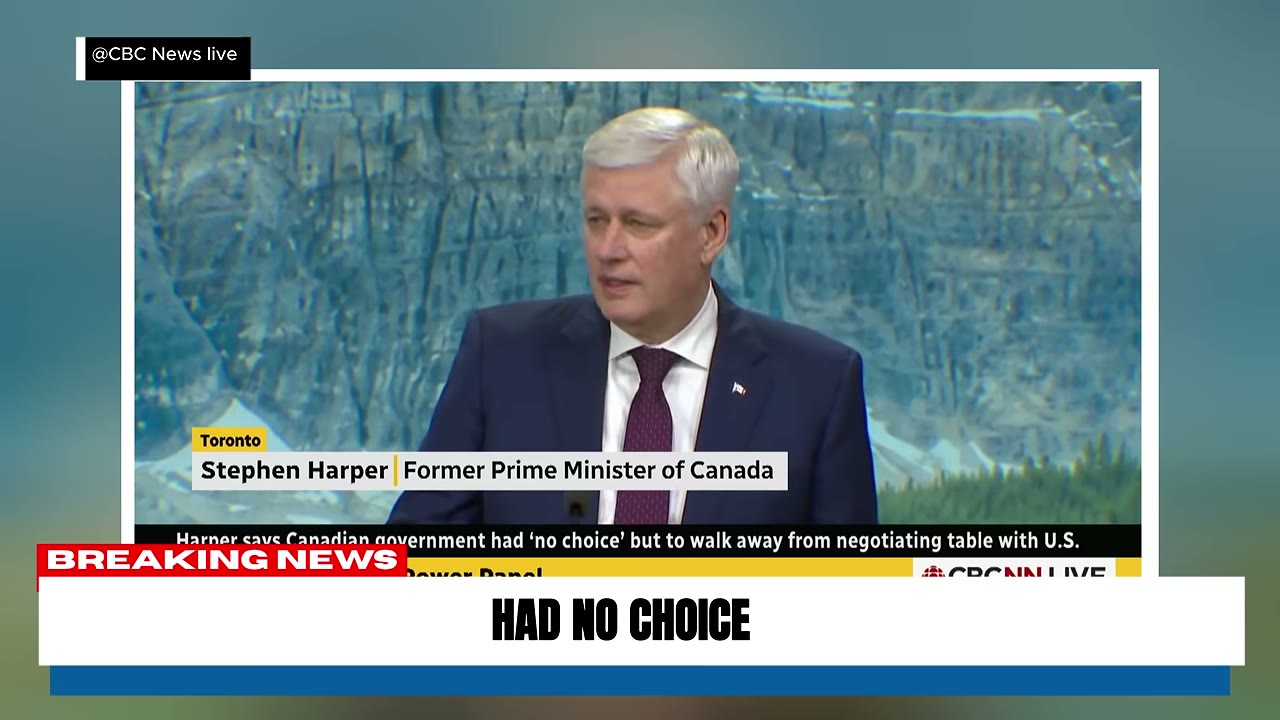
Stephen Harper said it was right for Carney to walk away from the trade talks — a notable endorsement as voices question whether Mark Carney overreacted, was driven by emotion or politics, and should have tried to find a deal.
Harper also talked about people having to bear costs. That is the question going forward: Carney has spoken of sacrifices, but what that looks like, and who bears the costs, has not yet been seen.
The costs go beyond economic turbulence — including massive increases in defense spending, and who might pay more in taxes to cover it.
9Patriotism Wave Faces Test When Economic Pain Hits Canadians
Mark Carney's biggest political asset is a huge swell of patriotism — and the open question is what happens when the rubber hits the road.
Carney framed the breakdown of talks as a matter of fundamental sovereignty, an explanation Canadians have been willing to get behind. But that support faces a harder test: whether people feel the same if a spouse loses a job because of this, or when times are already difficult.
The costs will also have to be accounted for — how they are distributed, and what the government drops from its spending to cover them.