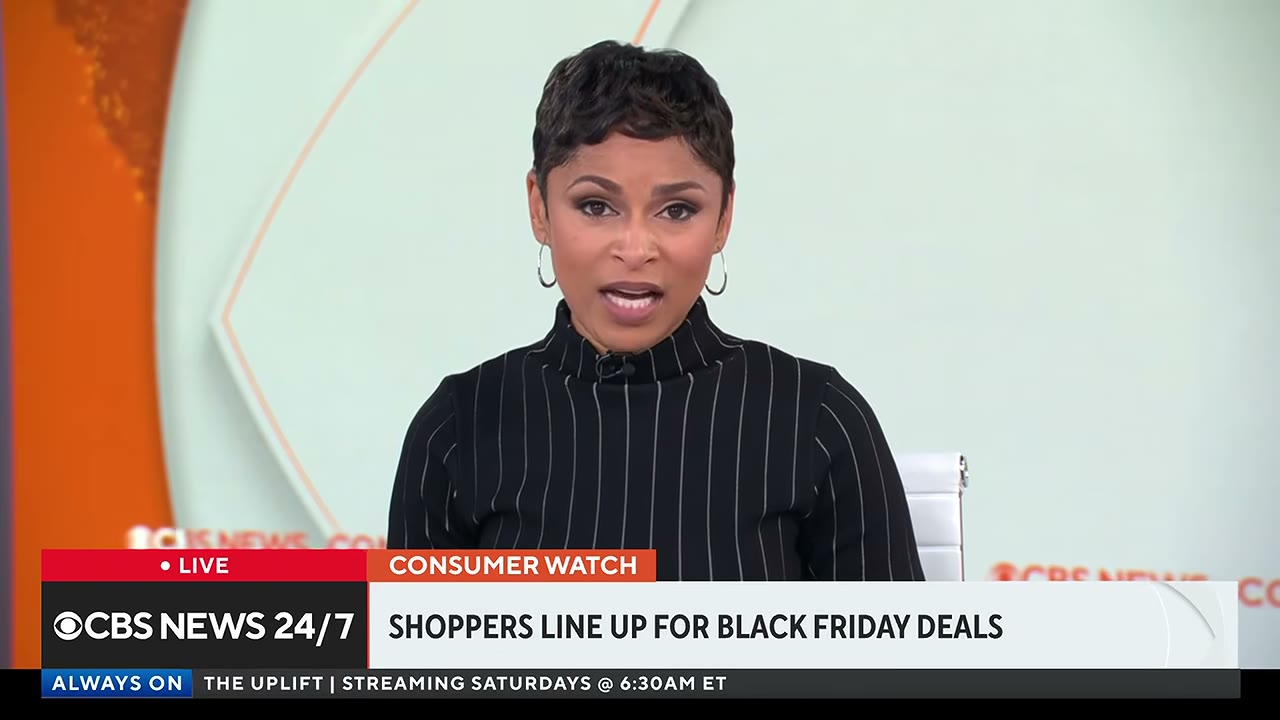
Black Friday shopping is underway with 183 million Americans expected to shop this weekend, though only 17% plan to hit stores today. The National Retail Federation predicts over $1 trillion in holiday spending, but shoppers are budget-conscious and online growth is driven by higher prices.
1Black Friday Shoppers Brave Cold and Lines as Holiday Season Kicks Off
Shoppers braved the early morning chill outside a Target store in Georgia as Black Friday shopping got underway. Overnight in California, long lines formed at an outdoor outlet mall.
The National Retail Federation predicts Americans will spend more than a trillion dollars this holiday season. Millions made their lists and checked them twice to score savings in a tight economy.
CBS News correspondent Tom Hansen reported from the Mills at Jersey Gardens in Elizabeth, New Jersey, where he had been talking to shoppers.
2183 Million Americans Expected to Shop Thanksgiving Weekend
183 million Americans are expected to shop this weekend, but only 17% are expected to hit the checkout lines today — down from 25% last year.
At the Mills at Jersey Gardens in Elizabeth, New Jersey, lines stretched around the corners for stores including Sephora. "There are still plenty of crowds showing up for some of the deals here today," CBS News correspondent Tom Hansen said.
The National Retail Federation expects $1 trillion to be spent between November and December. Hansen said shoppers are being more budget conscious this year, stretching their dollar and capitalizing on deals to stick to holiday budgets.
The mall's owner, Simon, offers members of its Simon Plus program rewards that can be stacked on top of big-box discounts.
3Online Holiday Spending to Top $47 Billion, Up 7.4% on Higher Prices
Shoppers are expected to spend more than $47 billion online between Thanksgiving and Cyber Monday, up 7.4% from last year, according to Adobe.
Much of that growth comes from higher prices rather than more purchases being made.
New data also shows people were spending their money on Thanksgiving itself.
4Adobe: Shoppers Spent Over $7 Billion Online on Thanksgiving
Shoppers spent more than $7 billion online on Thanksgiving, Adobe Analytics reports — a jump of more than 10% compared to this time last year.
Adobe credits some bigger deals on popular items for the increased spending.
Brett Rose, CEO of United National Consumer Suppliers, joined the broadcast to explain how to save. Asked which retailers to visit after work, he said shoppers should get started soon.
5Retail Expert Recommends Off-Price Stores for Deepest Black Friday Deals
Off-price retailers offer the best deals right now, according to Brett Rose, CEO of United National Consumer Suppliers. He named Ross, Costco and some big-box stores.
Rose said those retailers use alternate sourcing and AI to find product in the current market rather than buying it a year ago. "Those are clearly the winners," he said.
He added that they are also the winners Amazon can't compete with. "You can't copy the thrill of the treasure hunt," Rose said, describing the rush of a good deal in those stores.
Rose spoke at noon on his fifth store of the day.
6How Retailers Use AI to Buy Smarter and Compete With Amazon
Retailers that use AI to buy have a competitive advantage, Brett Rose, CEO of United National Consumer Suppliers, said. "A good buy is worth 10 door busters, any coupon, any refund," he said.
Rose said the money and profitability in stores is 100% in the buy. For the first time in the 25 years he has done this, he said, it is a level playing field between any brick-and-mortar store and Amazon.
Amazon always had the algorithm, he said; now every retail buyer has it, merging sales data with AI.
He said there is $5 billion a month in excess inventory in the U.S. market alone — first-quality excess merchandise, not salvage returns.
7Freight Costs and Tariffs Have Limited Impact on Holiday Shopping
Rising freight costs and tariffs may not hit holiday affordability the way past disruptions did, according to Brett Rose, CEO of United National Consumer Suppliers.
Asked about the impact, Rose said the same question came up over the last five years with the pandemic, stimulus money, midterm elections and which party held power. "For the first time ever, I'm almost going to say it doesn't," he said.
Everyday items — toothpaste, shirts, backpacks, toys for kids under the tree — are still needed, he said. Shoppers are trading over, not up or down: no longer loyal to a specific brand, but looking for a specific item.