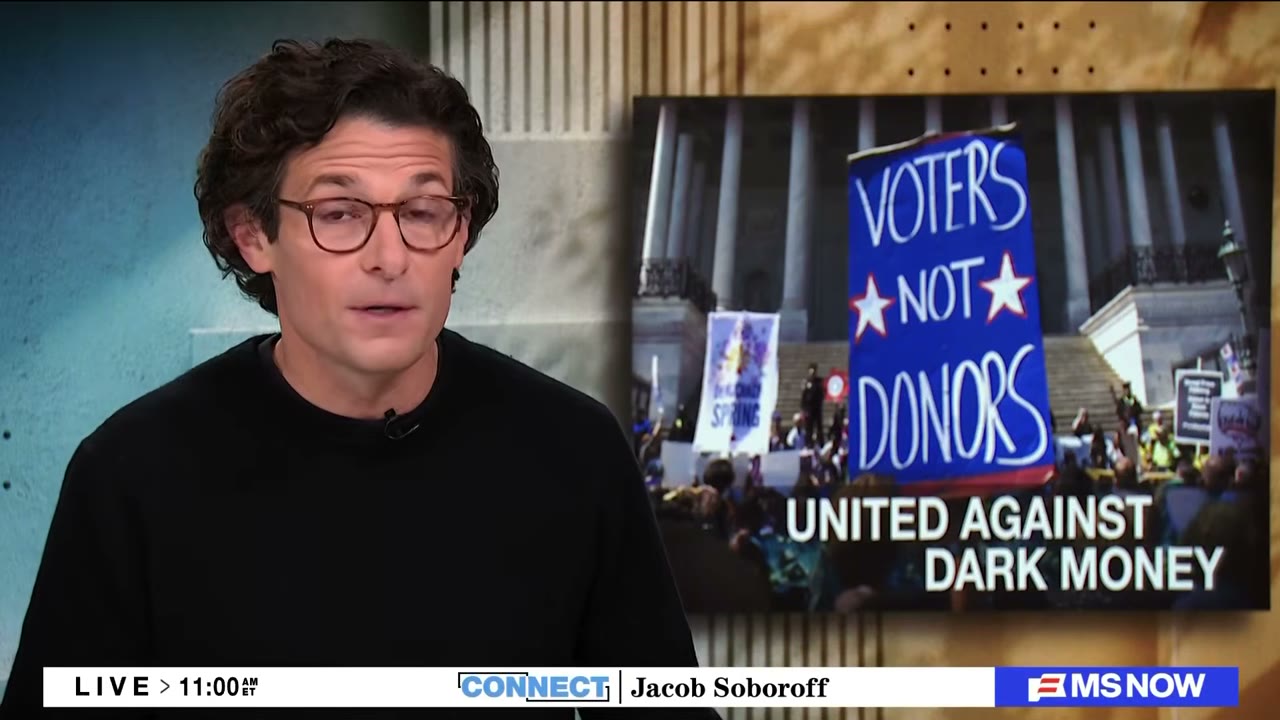
A look at the growing effort to reverse the Supreme Court's Citizens United ruling, from new Democratic Party debate rules to ballot measures in Montana and Michigan. Voters overwhelmingly backed corporate spending limits, but lawsuits and a reluctant Montana attorney general threaten the reforms.
1Citizens United Ruling and Justice Stevens's Warning
The Supreme Court struck down one of the last barriers to corporate election spending in 2010, ruling that government could not ban corporations and unions from independently spending unlimited money to influence elections. The majority's argument: money is a form of speech, and corporations have a First Amendment right to speak through their checkbooks.
Justice John Paul Stevens was so alarmed he read his dissent aloud in court. He warned the ruling threatened to "undermine the integrity of elected" bodies, and predicted "cynicism and disenchantment." He closed by saying the opinion rejected the common sense of Americans who have recognized the need to prevent corporations from undermining self-government since the founding.
2Most Americans Disagree With Citizens United, Polls Show
Sixty-three percent of Americans said they disagreed with the Citizens United ruling, including a majority of Republicans, according to a YouGov poll commissioned last year. Since the decision, Americans have repeatedly and consistently called on lawmakers to overturn it.
The polling figure lands as the push to reverse the ruling gains traction in Congress and inside the Democratic Party. The survey was commissioned last year; the transcript does not specify further details.
3Democrats in Congress and DNC Move Against Super PACs
Nearly all of the 13 incoming Democratic senators have vowed to overturn Citizens United, according to Bloomberg. Incoming House Speaker Hakeem Jeffries has too. The Democratic Party is moving as well: last week the DNC announced new rules for the 2028 presidential primary barring candidates from debates unless they denounce super PACs.
A candidate found to have authorized super PAC spending on their behalf would have to return it. Senator Elizabeth Warren called it "a powerfully important step in getting big money out of politics." The effort was also on the ballot in several states.
4Constitutional Amendment Is the Only Path to Overturn
Congress cannot simply pass a law to undo Citizens United, because the ruling rests on the First Amendment. Short of the Supreme Court reversing itself, legal experts say it would take a constitutional amendment: two-thirds of the House, two-thirds of the Senate, and ratification by 38 states.
Democrats have already introduced amendments to overturn the ruling in both chambers, and 23 states have passed resolutions calling on Congress to act. The question hanging over pledges and denunciations is how far they can really go.
5Montana's Century-Long Fight Against Big Money
In 1899, Montana copper baron William Clark wanted to be a U.S. senator — so he literally bought the seat. State legislatures chose senators back then, and Clark simply paid them off.
Montanans were not having it. Miners, ranchers and cowboys banded together and fought back against big money. In 1912 they approved a ballot initiative banning corporations from spending money to influence Montana elections. The law stood for 100 years — until Citizens United.
6Citizens United Struck Down Montana's 100-Year Law
In 2012, the Supreme Court used Citizens United to strike down Montana's 100-year-old law — without even hearing arguments. The decision unleashed a Pandora's box.
That same year, Montana's first Senate race after Citizens United topped $47 million in spending. By 2024, it hit $315 million — seven times as much over 12 years, an increase of more than 500 percent. Much of it came from "shadowy groups with wealthy donors," according to the Associated Press.
7Montana's New Ballot Measure Targets Corporate Spending
More than 100 years after Montanans first voted to keep big money out of elections, voters showed up again — approving a ballot measure on election night this year. It relies on a legal theory designed to get around Citizens United.
The measure changes state code to block any incorporated entity from spending money on state, local or federal elections. It covers not just Montana companies but non-profits and trade groups doing business in Montana — and spending on a Montana election counts as doing business there. Out-of-state groups that pop up just to dump money on a race would no longer be able to.
8Montana GOP Sues and AG Refuses to Defend Voter-Approved Law
Montana voters approved the measure to limit corporate political spending by a nearly two-to-one margin. The state's Republican attorney general, Austin Knudsen, says he has no plans to defend the law they just passed.
A lawsuit challenging it was filed at exactly 11:15 p.m. on election night — the same night it passed. Among the plaintiffs: the Montana Republican Party.
9Michigan Voters Ban Utility Spending, Utilities Sue
Michigan voters approved Proposal 2 with 81 percent of the vote, banning utilities like DTE and Consumers Energy from bankrolling the politicians who regulate them. Two days later, both companies sued.
The pattern repeats Montana's: voters overwhelmingly approve measures to limit corporate money in politics, and corporate interests go straight to court to try to undo those decisions.
10Broad Bipartisan Support for State Anti-Corruption Measures
Seventy-two percent of Americans nationwide say they would support similar measures in their own state, according to a poll by Issue 1 — including 64 percent of Republicans. You do not get 81 percent in Michigan from just one party, or 65 percent in Montana from Democratic voters alone.
Nearly half of all eligible Americans voted in one of the highest midterm turnouts in more than 100 years. Voters this November, the argument goes, proved a stronger check on abuse of power than many institutions supposed to protect them.
11Tiffany Muller on Momentum Against Citizens United
Tiffany Muller, president of End Citizens United, says the momentum against the ruling is unlike anything her group has seen. "The ruling was, as you said, 16 years ago and everything that Justice Stevens warned about in his dissent is absolutely what we have seen come true," she said.
She said voters connect the pay-to-play system in Washington to the cost of gas, groceries and housing, and to why prescription drug prices cannot come down. "The system's working really well if you're a big corporation or if you're a billionaire," she said. "But if you are just a working family across America, you feel like your voice doesn't matter."
12Voters Tie Corruption to Gas, Grocery and Housing Costs
Sixteen years after Citizens United, voters are connecting the dots between corruption and their own bills, according to End Citizens United president Tiffany Muller. She did town halls across the country and heard it again and again.
"You didn't have to draw the line from the corruption in Washington, D.C., to what they were paying at the gas pump," she said. "They already understood that." She noted the country has not seen this many incumbents defeated since Watergate — and said it is no coincidence both elections were driven by anti-corruption reforms.
13Record Incumbent Defeats and 300 Reform Candidates
More than 300 candidates ran centered on anti-corruption reforms — refusing corporate PAC money, pledging to overturn Citizens United and to ban congressional stock trading. They flipped seats across the country and are now bringing that energy to Washington.
End Citizens United's Tiffany Muller called it the largest group of reformers she has seen, and said the country is seeing "the kind of culmination of what was inevitable to happen under a Citizens-United environment."
14How Much Can States Do Under Citizens United
States are testing pay-to-play laws, disclosure rules and even changes to corporate charter powers — and corporations are suing to stop them. Montana and Michigan are the laboratories, and the reforms are already drawing legal challenges from companies trying to protect their access and influence.
States are "being very creative to try to address the corruption that they're seeing in their own state," said Tiffany Muller, president of End Citizens United. The measures include transparency laws and pay-to-play restrictions, plus efforts to change corporate charter commission powers.
The limits of state action under the Citizens United framework remain the open question. Muller argued states must keep pushing while Congress acts, saying both tracks are needed: "We can do both at the same time."
15Supreme Court's 'No Corruption' Logic and Donor Spending
The Supreme Court's claim that independent spending doesn't corrupt elections is facing a direct challenge — from those who say unlimited donor cash works just like corporate cash. The court's logic rests on spending not being coordinated with candidates.
"I don't see much of a distinction between wealthy donors spending unlimited sums and corporations spending unlimited sums," said Tiffany Muller, president of End Citizens United. She called for limits on everybody, full disclosure, and "a cop on the beat" enforcing the laws.
That cop, she said, is missing: the Federal Elections Commission has been defunct since February 2025. Muller also said the Supreme Court itself is "captured by big money," making court reforms critical.
16Quick Congressional Fixes Short of a Constitutional Amendment
A constitutional amendment needs two-thirds of the House and Senate and three-quarters of the states to ratify. But Congress could act "tomorrow with a simple vote," said Tiffany Muller, president of End Citizens United.
Her list: pass disclosure and transparency laws, crack down on super PAC and candidate coordination, reform the Federal Elections Commission, and ban congressional stock trading.
Muller tied the agenda to a new Democratic majority, arguing there is "so much we can do tomorrow" without waiting on a constitutional amendment or the court reversing itself.