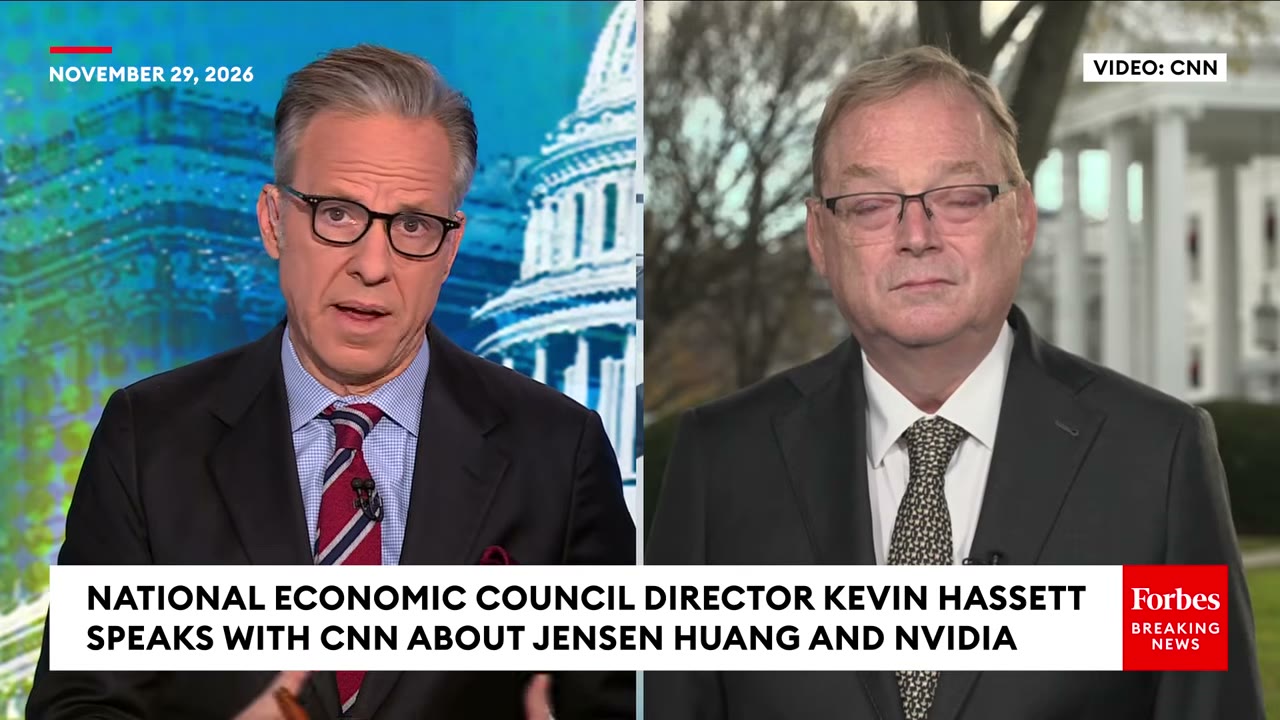
White House economic adviser Kevin Hassett defends sweeping new tariffs on China, Brazil, the EU and 11 other countries. He argues the president retains broad legal authority under Sections 301 and 232 despite a Supreme Court ruling limiting tariff powers.
1Supreme Court Ruled President Lacks Broad Tariff Authority
The Supreme Court ruled that the president does not have the authority "to impose tariffs on imports from any country on any product at any rate and for any period."
The justices rejected the broad tariff power the White House had claimed. The decision strikes at the core of how President Trump has imposed tariffs: by acting alone, without Congress.
The court's language was sweeping, covering any country, any product, any rate and any duration. That leaves no room for the kind of open-ended tariff authority the administration had asserted.
The ruling rests on a simple constitutional principle, according to the decision: the power to impose tariffs belongs to Congress, not the executive branch. The White House, the ruling implies, cannot substitute its own judgment for the legislature's.
That raises the question the administration now faces. If the president wants more tariffs, why not go to Congress? The White House has instead kept coming up with new political justifications for Trump to impose them, according to the criticism aired after the ruling.
What happens next is unclear from the ruling alone. The decision does not say Congress must act, and it does not say the president is powerless in every case. It says he lacks the broad authority he claimed.
The political fight now shifts to whether the White House will seek congressional approval for new tariffs, or keep searching for legal routes around the ruling.
2Hassett Says President Has Wide Range of Tariff Powers
The president still has a wide range of powers to impose tariffs, a top economic adviser said, even after the Supreme Court rejected the broad authority the White House had claimed.
Kevin Hassett pointed to Section 301, which he said is currently in effect. It deals with countries that subsidize excess capacity in ways that harm American workers. But he said it is only in a discussion period, and tariffs have not yet been imposed under it.
He also cited Section 232, aimed at countries with excess steel production capacity that dump steel on the US market. Hassett said that practice puts American steel companies on the verge of bankruptcy.
"There are a lot of presidential powers," Hassett said.
The authority the Supreme Court rejected, in the administration's view wrongly, would have worked much more quickly than the Section 301 process. That route requires a period of deliberation and other procedural steps before tariffs can take effect.
So the practical difference is speed. The administration can still act under existing statutes, but those paths come with built-in delays and legal conditions. The broad power the court struck down would have let the president move faster.
What comes next depends on which route the White House chooses, and how quickly the Section 301 and 232 processes can produce tariffs.