This episode explores the personal side of Józef Piłsudski, from his love of donuts to his custom car, and reveals a piano given to Ignacy Jan Paderewski that sat unrecognized at the Warsaw Chopin University of Music. It also covers four decades of Polish video games, Warsaw's first Day of the Dead parade, and a Hot Wheels stunt show.
1Warsaw Trail Reveals Piłsudski's Donuts, Custom Car and Family Life
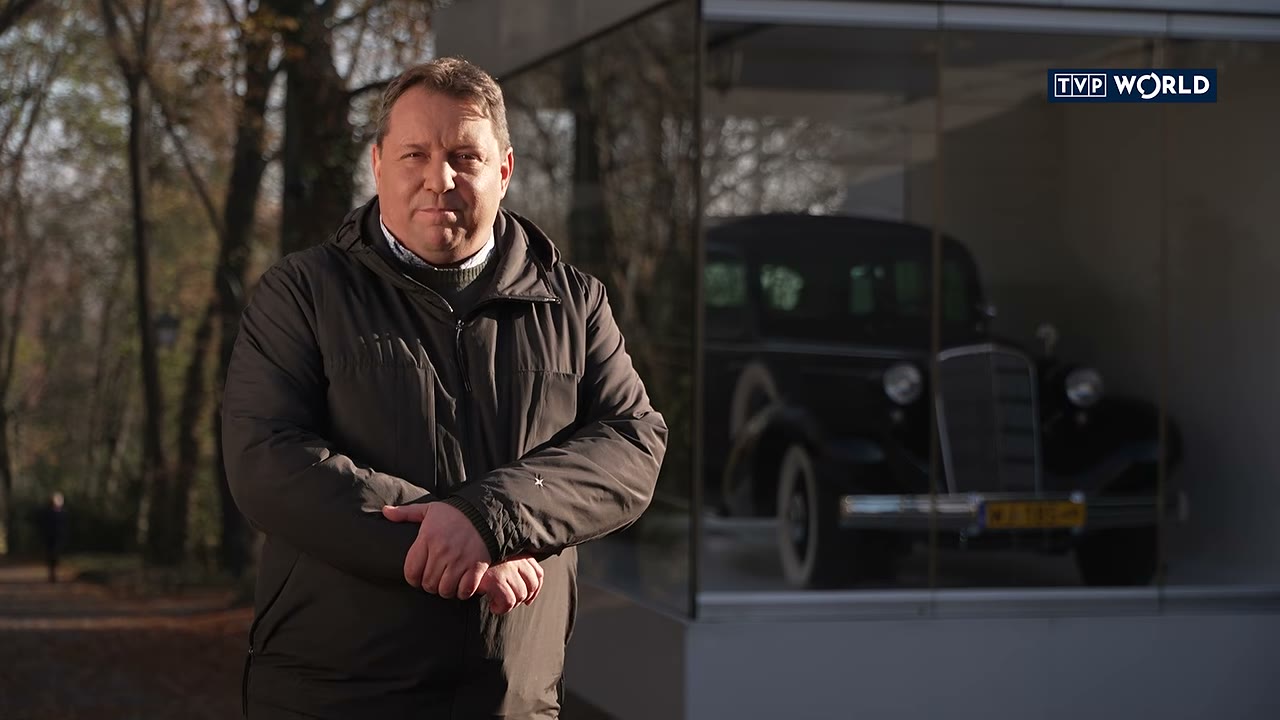
Józef Piłsudski called his custom American car a coffin and reportedly rode in it only once. The vehicle, built in America with a small ladder for the elderly marshal, sits a short distance from the Belvedere Palace, where he lived for years.
Warsaw holds other traces of the independence leader. He brought his daughters to Park Ujazdowski, an English-style park in the city center, and weighed them on a public scale that arrived in 1912. The land under it is still privately owned.
At the Hotel Bristol's Raspberry Salon, he gave a 1923 farewell speech and called one opponent a spitting dwarf. He also loved sweets, including doughnuts from a shop founded in 1925.
2Warsaw Music University Identifies Piano Gifted to Paderewski
A worn practice piano at Warsaw's Chopin University of Music turned out to belong to Ignacy Jan Paderewski, one of the founding fathers of post-World War I Poland. No one at the university knew until a serial number check last year.
A university delegation was in Hamburg in March last year to pick a Steinway & Sons grand piano. Company representatives said they keep a full inventory of instruments from their New York and Hamburg factories. The university texted the old piano's serial number, and Steinway called straight back.
Steinway had not sold the instrument. It gave it to Paderewski so he could practice on it during his return to Poland; he made the journey by ship on May 16, 1900. How it reached the university is a mystery, though staff believe it went to the Warsaw State Conservatory, the university's predecessor.
"I didn't know about it," one student said.
3University Seeks 30,000 Euros to Restore Paderewski's Piano
The Chopin University of Music is raising 30,000 euros to restore Paderewski's piano — modest next to what its owner gave away. Paderewski's music made him a millionaire, but he donated much of the wealth.
He bought land and set up a vineyard in Paso Robles, California, which helped grow the area's wine industry, and owned villas including Riond Bosson in Switzerland. He became a celebrity recognizable on magazine covers.
He financed Polish military units on World War I fronts, known as the "Blue Army" of General Józef Haller, and co-founded the General Polish Relief Committee for war victims, donating 100% of his concert proceeds. He set up funds for young musicians in Germany and America. As a politician, he helped secure free sea access for Poland as the 13th point of Woodrow Wilson's peace plan.
4Exhibition Marks Four Decades of Polish Video Games
The Witcher 3 alone has sold over 65 million copies worldwide — a long way from a Warsaw computer-market stall. A new exhibition traces four decades of Polish video games, showing 15 of the most popular titles and opening the first Polish Video Game Days.
For the first time, medals for service to Polish culture went to game makers rather than musicians, painters and poets. Among the recipients was Adrian Chmielarz, whose small independent studio won a BAFTA for the mystery "The Vanishing of Ethan Carter."
In the early 1990s, Michał Kiciński was selling imported games from a stall. The company he co-founded is behind The Witcher, steeped in Slavic folklore. The exhibition moves from 1980s blocky pixels to neon-lit mega-cities.
"I think it's because of our creativity and of course our hunger for success," one person said of Poland's rise.
5Warsaw Hosts First Day of the Dead Parade
Colorful skulls, marigold flowers and mariachi bands filled Warsaw's streets this week for the city's first "Día de Muertos" parade. Painted faces and candlelight brought Mexico's Day of the Dead to the Polish capital.
The celebration honors loved ones who have passed away "not with sadness, but with celebrating their memories," with the ofrenda — an altar of images and candles — at its center. "We talk about them, and listen to the music they liked, and sometimes we eat the food they liked," one participant said.
Tourists gathered at the University of Warsaw Museum inside the historic Tyszkiewicz-Potocki Palace, where Mexican and Polish culture met. Mariachi musicians led the crowd through the streets, and dancing continued after the parade ended.
6Hot Wheels Stunt Show Debuts at Warsaw's Atlas Arena
Cars fly off ramps and land from a height of 10 or 11 meters in the Hot Wheels Stunt Show, which has come to Warsaw for the first time. Rehearsals took place at Atlas Arena, with a 10-meter loop among the attractions.
Tires screeched and gasoline filled the air as cars hit full speed. "This is a great moment for everyone here at Atlas Arena as we prepare for the best emotions and the best stunts and stunt team in the world," one organizer said.
For some drivers, the show fulfills a childhood dream. "A few years ago I was one of those kids and I used to see things like that," one stunt driver said. "I think the world belongs to dreamers."