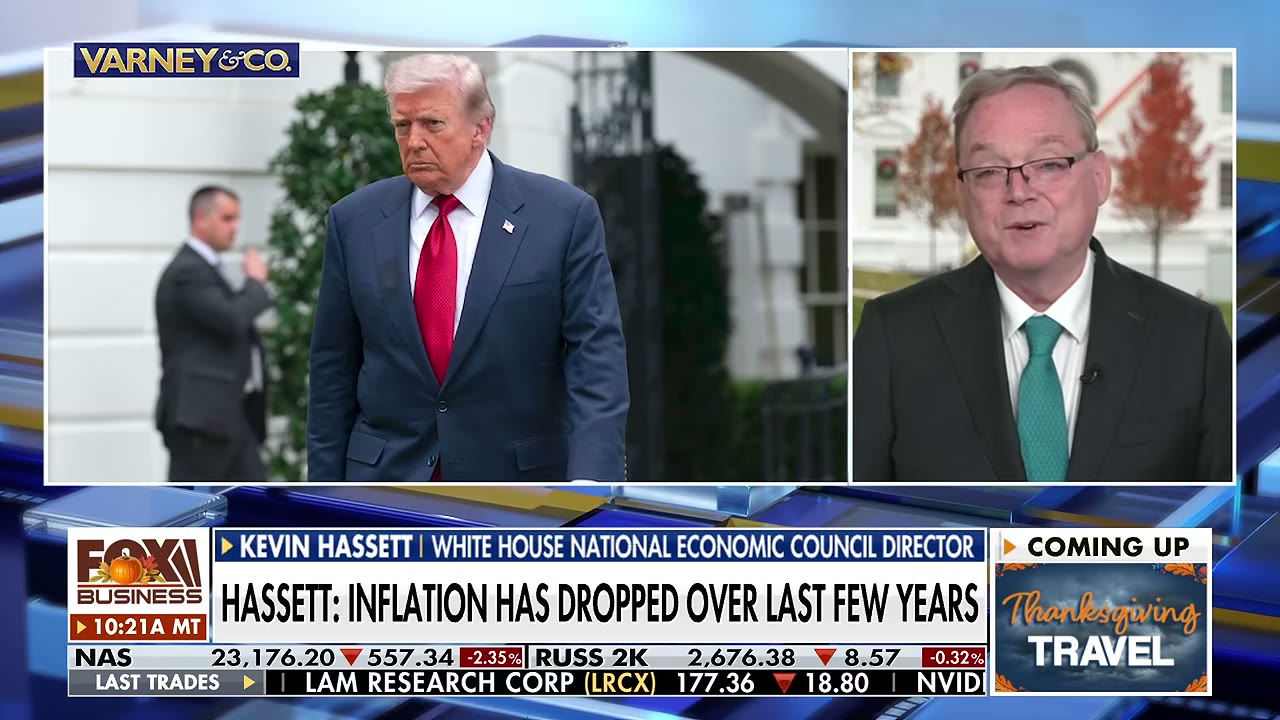
The Trump administration is proposing a new round of tariffs on 14 major trading partners, including China. The move comes as the PCE index rose 3.8% year over year and third-quarter GDP growth was revised up to 4.3%. Fox Business panelists debate whether tariffs help or hurt consumers.
1Kevin Hassett says tariffs help American goods and exporters absorb costs
Kevin Hassett says exporters, not American consumers, have absorbed the cost of tariffs. He pointed to falling inflation as evidence the duties have not driven up prices.
"Exporters have more or less covered these costs themselves," Hassett said.
He cited the PCE numbers released that day, which fell from 0.5 to 0.3 — close to the target. That decline came while other duties were already in effect, he said.
Critics argue the tariffs will lead to significant increases in commodity prices in the US. Hassett's claim puts him at odds with that view, and the debate over who ultimately pays is far from settled.
2Panelists clash over whether tariff costs fall on consumers
A panelist openly broke with Kevin Hassett over who really pays for tariffs. Marcus said he must respectfully disagree: if exporters cover the duties, consumers may still feel them.
"Don't consumers feel it?" he asked, arguing the costs ultimately fall on shoppers after exporters deal with them.
He described a combination of factors. Factories initially absorbed the duties because production was busy. Recently, he said, certain governments have started subsidizing them.
He also called the timing "extremely tactless," pointing to an election lost to people who said affordability is a problem and argued duties are not a tax.
3Defenders argue mirror tariffs level the playing field for the US
Supporters of tariffs pushed back on the negative messaging, arguing mirror duties can level the playing field for the US. If China taxes American goods, one panelist said, a matching tariff on Chinese goods is a positive thing.
He asked whether the president should act precisely against China, Vietnam and India — and noted general tariffs are now being introduced instead.
"He's doing it to level the playing field for the United States of America," he said.
He complained that nobody talks about growth or a strong economy, only negative messages about tariffs and affordability. Factory jobs were never meant to return, he said — but now they are coming back.
4Jackie DeAngelis warns tariffs could force a Fed rate hike
Tariffs are a great tool for attracting investment but a terrible idea in themselves, Jackie DeAngelis said — and the timing is making markets nervous. She questioned another tariff conversation right after the midterm elections, while the NVIDIA mess is being sorted out.
"That's what's putting pressure on the markets right now," she said.
If you believe tariffs cause inflation, she said, the market reads today's data as a sign a Fed rate hike is coming if inflation doesn't go away. That prospect, she said, is pushing the market down on top of other problems.
510-year bond yield and oil prices analyzed after PCE data
The 10-year bond yield sits at 4.8% as falling oil prices muddle the inflation picture. Oil is included in the PCE index, but the data is past — so the next month's numbers will show how oil starts to factor in.
Oil prices are falling, the panel noted.
The GDP figure drew praise, though it is also driving the steepness of the 10-year bond, even as it has come down a little. Growth is great, but it affects the bond market — and that market remains relatively nervous about what the Fed might do.
6GDP growth of 4.3% beats estimates as tariff refunds reach businesses
GDP grew at an annual rate of 4.3%, beating the 3.4% estimate — a result described as a huge turnaround. The question now is whether 5% is waiting in the near future.
On tariffs, a lot of that money went back to business. Tariff refunds have been in effect since the Supreme Court rejected them.
The panelist said he isn't too concerned about the tariff talk because he expects it to return to the Supreme Court, which he predicted would use the same reasoning and reject it again.
7Holiday spending holds up as Kohl's cuts prices for bargain shoppers
Kohl's is cutting prices to pull in bargain hunters, with Christmas stocking stuffers selling for $15 to $30 apiece. The move comes as pre-holiday growth holds up and people keep spending.
"Accessibility is a real problem," a panelist said, adding that business reacts to what people feel and say.
On gas prices, Phil Flynn says oil could cost $70, while JP Morgan is predicting — a forecast left unfinished on air.