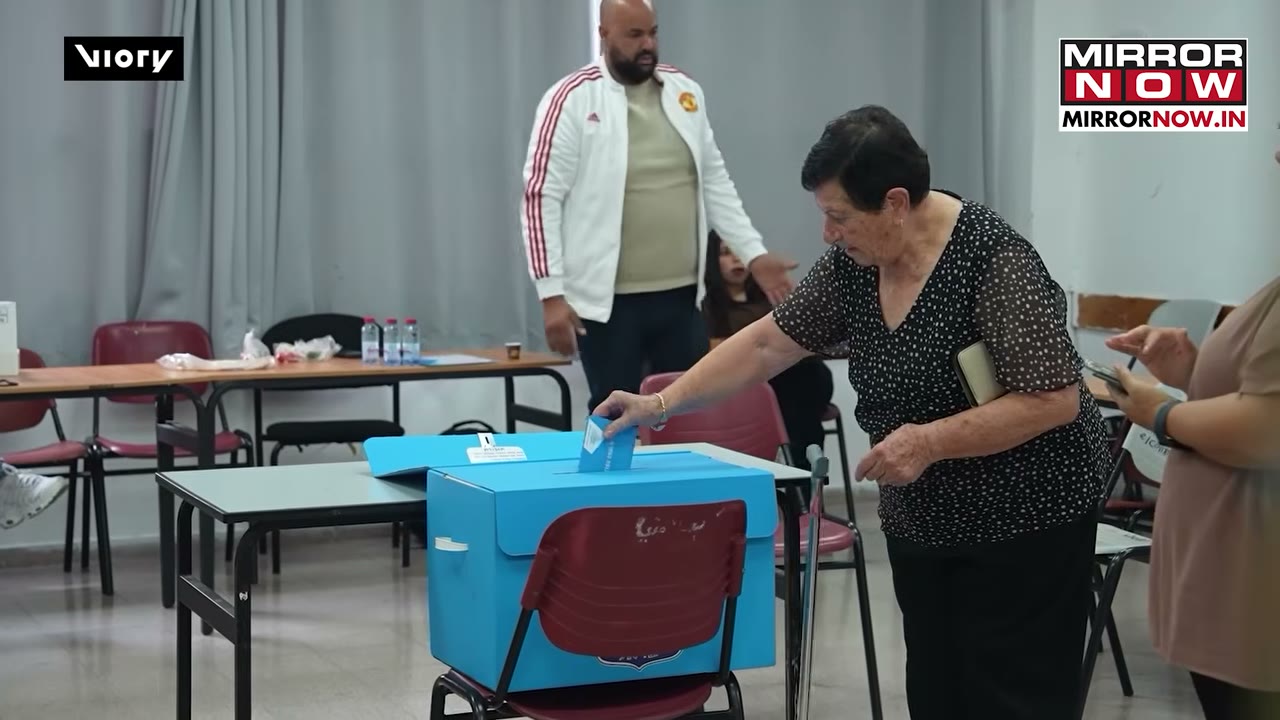
Israeli Prime Minister Benjamin Netanyahu and former Chief of Staff Gadi Eisenkot met for two hours in Tel Aviv without reaching a coalition agreement. Eisenkot rejected Netanyahu's rotating prime ministership proposal and gave Likud 24 hours to decide on a unity government.
1Netanyahu and Eisenkot Hold Two-Hour Meeting on Coalition Impasse
Benjamin Netanyahu and Gadi Eisenkot met face to face for two hours in Tel Aviv — their first direct meeting since Israel's October 27 elections — and walked away without a deal.
The talks centered on whether a political agreement could end the coalition impasse and produce a national unity government. Disagreements remain over leadership, ministerial positions and the terms of any power-sharing arrangement.
Neither side reached a final agreement, leaving the future of the proposed arrangement uncertain. Both camps are weighing ways out of the political crisis, and the direct communication between the two leaders is being closely watched. Israel still lacks a stable governing coalition.
2Talks Open With Security Briefing Before Coalition Negotiations
Before any coalition bargaining began, the talks opened with a security briefing.
Israel's security situation has become a key topic in the political debate, with Netanyahu trying to shape a potential unity deal around national priorities.
Ron Dermer, an Israeli strategic affairs figure, also joined the discussions, adding another influential voice as the two camps explored the terms of a possible government.
3Netanyahu Proposes Rotating Prime Ministership With Eisenkot
At the center of the talks sat a rotating prime ministership: Netanyahu and Eisenkot taking turns as prime minister.
Netanyahu reportedly wants to lead the government in the first phase, then hand the post to Eisenkot. The sequence has become a key point in negotiations, with the timing and guarantees of any transfer of power still unagreed.
Eisenkot rejected Netanyahu's terms for the arrangement. The proposal, as it stood, did not meet his requirements — a disagreement that revealed a serious obstacle to a unity agreement.
4Eisenkot Rejects Rotation Terms and Issues 24-Hour Ultimatum
Eisenkot handed Netanyahu's Likud party a 24-hour deadline to decide on forming a unity government.
He rejected Netanyahu's terms for a rotation arrangement, saying the proposal in its current form did not meet his requirements. The disagreement exposed a serious obstacle to any unity agreement.
The ultimatum raises the pressure on the negotiations and signals Eisenkot wants clarity before making his next political move.
5Bennett's Party Holds Separate Coalition Talks, Backs Unity Government
Naftali Bennett's party is running its own coalition discussions, separate from the Netanyahu-Eisenkot track.
The parallel talks show efforts to form a government are moving through multiple political channels, not solely dependent on a deal between the two leaders.
Bennett called for a broad Zionist unity government, presenting it as a possible way out of the political impasse.