South Africa's first Test against Australia in Durban lost more than 60 overs to bad light, reviving debate about the sport's rules. A BBC Stumped panel weighs a new ICC rule allowing pink balls in day Tests, light meters and earlier start times.
1Australia Beat South Africa by 214 Runs in Durban Test Marred by Bad Light
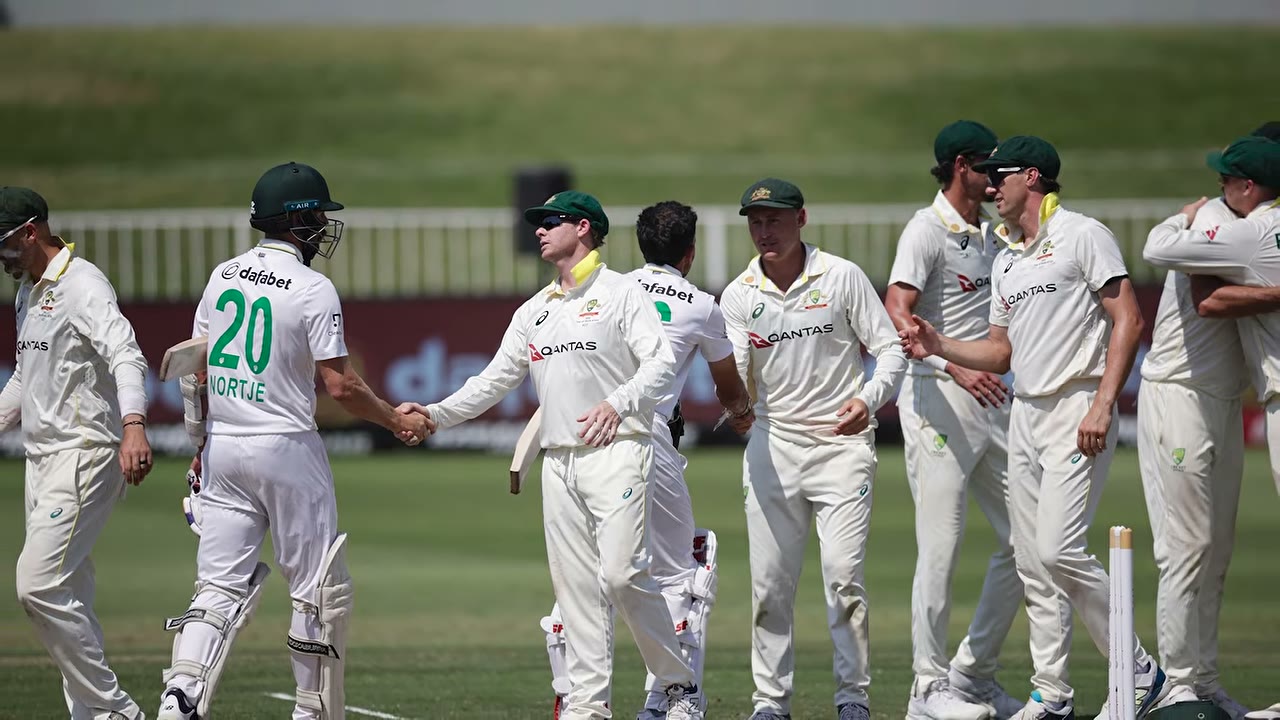
Australia beat South Africa by 214 runs in the first Test in Durban — a match that lost more than 60 overs to bad light over the first three days. Matt Renshaw starred for the tourists.
It was the first Test between the two sides in South Africa since Sandpapergate eight years ago. South Africa's men now hope to bounce back and level the series in Gqeberha.
The lost overs sparked a debate about what should be done about bad light, even though a result was still achieved.
2Kingsmead's Early 9:30 Start and No Daylight Saving Worsened Light Delays
Kingsmead had never hosted a Test this early in the season, and that did not help. There is no daylight saving in South Africa, and no time was added before the start of play — which was already early at 9:30 in the morning.
So when bad light cut play short, there was little room to make it up. There are a couple of ways around the problem, but cricket carries "a little bit of conservatism", the panel said.
3New ICC Rule Lets Teams Start Tests With Pink Ball If Both Agree
New ICC regulations allow teams to start a match with a pink ball if both sides agree. The panel was asked whether that rule could have helped in Durban.
The answer was yes: had this day Test been played with a pink ball, the stoppages for bad light would not have happened.
Whether teams will actually use the rule is another question — it requires both captains to agree before the game.
4Sunil Gupta Says Pink Ball Must Be Swappable Mid-Match to Work
Starting with a pink ball is not enough, Sunil Gupta argued — teams must be able to switch back to red. If bad light hits day one and sunshine follows for four days, a pink ball under a blue sky is like "a jujube coming at you", he said.
He wants a pink ball that can be replaced with the same wear and tear as the red, then swapped back. He called that almost impossible right now — but said cricket is dealing in impossible scenarios.
With bad light affecting play and people not coming in to watch, "you've got to do something to resuscitate" Test cricket, he said.
5Jim Maxwell Calls Pink Ball a Dud and Rejects Daytime Use
Jim Maxwell does not like the pink ball. "I think it's a dud," he said. It has either too much happening under lights or not enough during the day, when it gets soft faster than the red ball.
He also dismissed the new rule: both captains must agree at the start of the game, and they are not going to do that.
He pointed to South Africa's record — something like 38 Test matches in the country since they last had a draw — and asked how much time you need to get a result anyway.
6Maxwell Blames Rigid Light-Meter Benchmark for Umpires Leaving Field
Umpires take a benchmark light reading on a given day, and every time the light falls to that point on the meter, they leave the field. Jim Maxwell called that a defiance of common sense.
He said the hard benchmark does at least keep things consistent, so umpires are not accused of favouring one side. But he called them "too precious" about the light: with the lights on and a red ball, he argued, play could surely continue another half hour.
His other fix: add the time on up front, because adding it at the end of the day is pointless when it is too dark.
7Panel Debates Whether More Pink-Ball Tests Would Improve the Ball
Only about 25 men's pink-ball Tests have been played, and most of them in Australia. That limited record helps explain the suspicion around the ball, the panel said.
More pink-ball cricket would speed up research and development, the argument went. The ball cannot be manufactured the same way as the red — the leather properties differ.
But if the pink ball is good enough for those 25 Tests, logic says it is good enough for as much Test cricket as possible.
8Sunil Gupta Says Cricket Must Adapt Like Other Sports to Survive
There is not one red ball anyway, Sunil Gupta said — the SG and the Kookaburra differ, and there is a white ball too. The pink is just another ball.
He argued cricket must adapt to circumstances, as other sports do. T20 has overtaken the world, he said, and will do more of it; he cited the enormous number of T20 games scheduled for 2027.
If using the pink ball his way means taking a strong stance, he said, so be it — flexibility is what keeps Test cricket going.
9Panel Warns Bad Light Stoppages Drive Spectators Away From Tests
Bad-light stoppages come back to crowds: why turn up if the light might cut the day short? The panel said fans may skip a day's play for that reason.
The panel also sensed players are getting used to the pink ball. In the first couple of years of pink-ball Tests there was heavy scrutiny of every aspect; now players get on with it.
One idea: switch from red to pink around 5pm, with a 20-minute gap for players to warm up and get their eye in — like Wimbledon when the roof comes over.
10Jim Maxwell Calls Pink-Ball Anniversary Test Disrespectful to Tradition
Jim Maxwell objected to a pink ball being used for the 150th anniversary Test in March, calling it a slight on the last 50 years of Test cricket.
He said he put it to someone on the board: "So why are you disrespecting the last 50 years of Test cricket by playing with a pink ball and not a red ball?" The reply was that the game is evolving and reaching a different audience.
He rejected that. Tests should be played with the red ball, in white clothing, during the day. Night cricket does not work everywhere, he said — dew in England and India — and the pink ball has little future until it is fixed.
11Sunil Gupta Cites Wimbledon's Roofs and Tiebreaks as Cricket's Model
Wimbledon once had no tiebreaks and no roofs over Centre Court or Court Number One. Now it has both. Sunil Gupta points to that shift as the model cricket should follow.
Wimbledon is "the temple of tradition," he said, yet it changed — adding tiebreaks and roofs, and dropping the rule that women had to wear white underwear. The reason, he argued, is the money and the fans: people pay a lot and want to watch a game, not sit in the rain.
Cricket faces the same choice over ball colour and retractable stadium roofs, Gupta said. He expects that stage to arrive sooner rather than later.