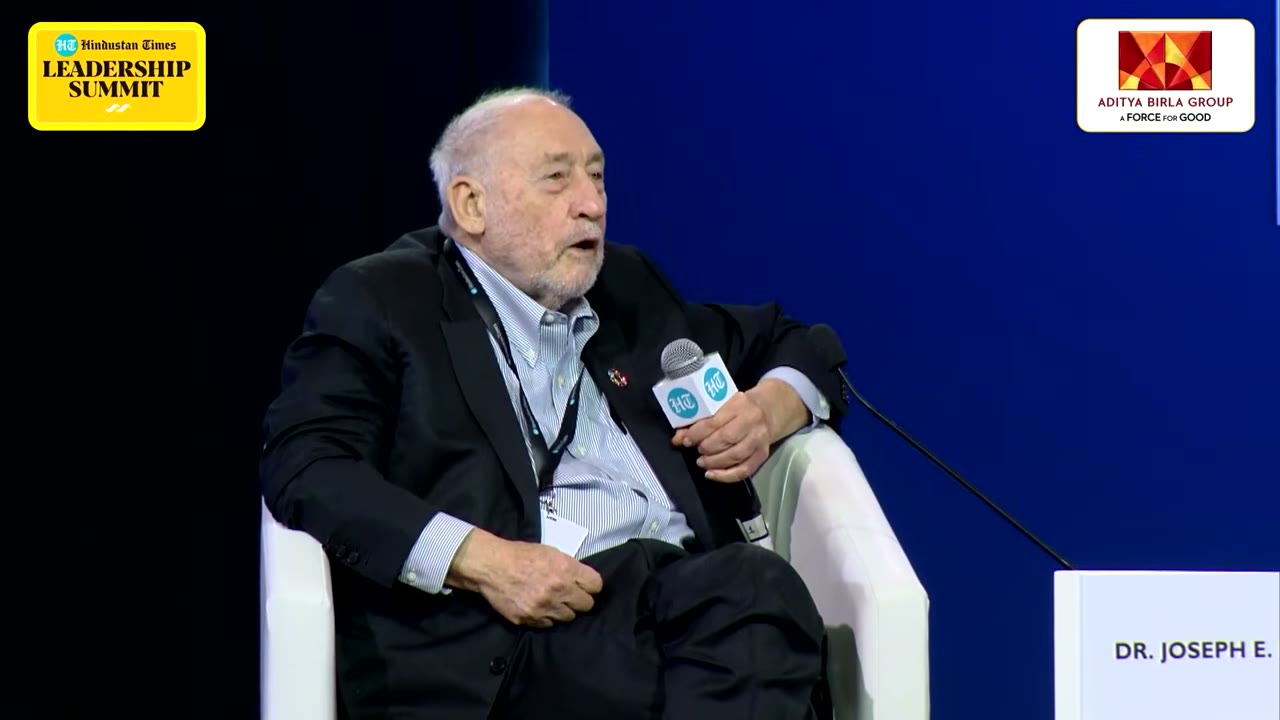
Economist Joseph Stiglitz tells Hindustan Times that the post-war vision of a world without borders was a fantasy. He argues national economic sovereignty, capital controls and trade policy will shape the future, citing COVID vaccine hoarding, Trump and Brazil's election.
1Stiglitz says post-WWII world without borders was a fantasy
The borderless world the United States pushed for after World War II was "a fantasy," Nobel economist Joseph Stiglitz said, and the countries now acting on that lesson are not the ones Washington expected.
Speaking at HTLS 2026, Stiglitz said the post-war construction — in which the US argued for a world without borders, or where borders mattered less — had an enormous transformative effect on China, India and many other countries. But that era is over, he said: "we are now in a world where borders do matter."
The shift began before Trump and before COVID-19, Stiglitz said. During the pandemic, every country tried to hoard its vaccines, therapeutics and even masks — a reminder that borders did matter. Trump, he said, has since reminded countries of the same thing, and they now have to have national economic sovereignty.
He expects that sovereignty to become a defining feature of the global economy, and with it a turn toward capital controls. The United States, in his view, will not make that move, but developing countries and emerging markets will — for different reasons.
In India, he said, the motive may be to encourage more investment in India. Brazil offered a sharper example. In its elections, Stiglitz said, it at times seemed Wall Street's vote was as important as the Brazilian vote, and Wall Street voted disproportionately against Lula and expected him to lose.
Brazilians decided they, not Wall Street, should choose the next president, he said. The stock market initially fell and people worried, but they voted for Lula anyway. The irony, Stiglitz added, was that the stock market had done very well in all three previous Lula administrations — Wall Street simply did not like his politics.
The lesson he drew: countries without some degree of financial restraints may find that Wall Street is an important voter.