President Trump's intervention to reinstate Nvidia's CEO has economists warning of government meddling in corporate governance. The move comes as holiday shopping hits $9.7 billion online and inflation outpaces wages, raising broader concerns about the economy.
1Holiday shoppers projected to spend billions online as inflation squeezes budgets
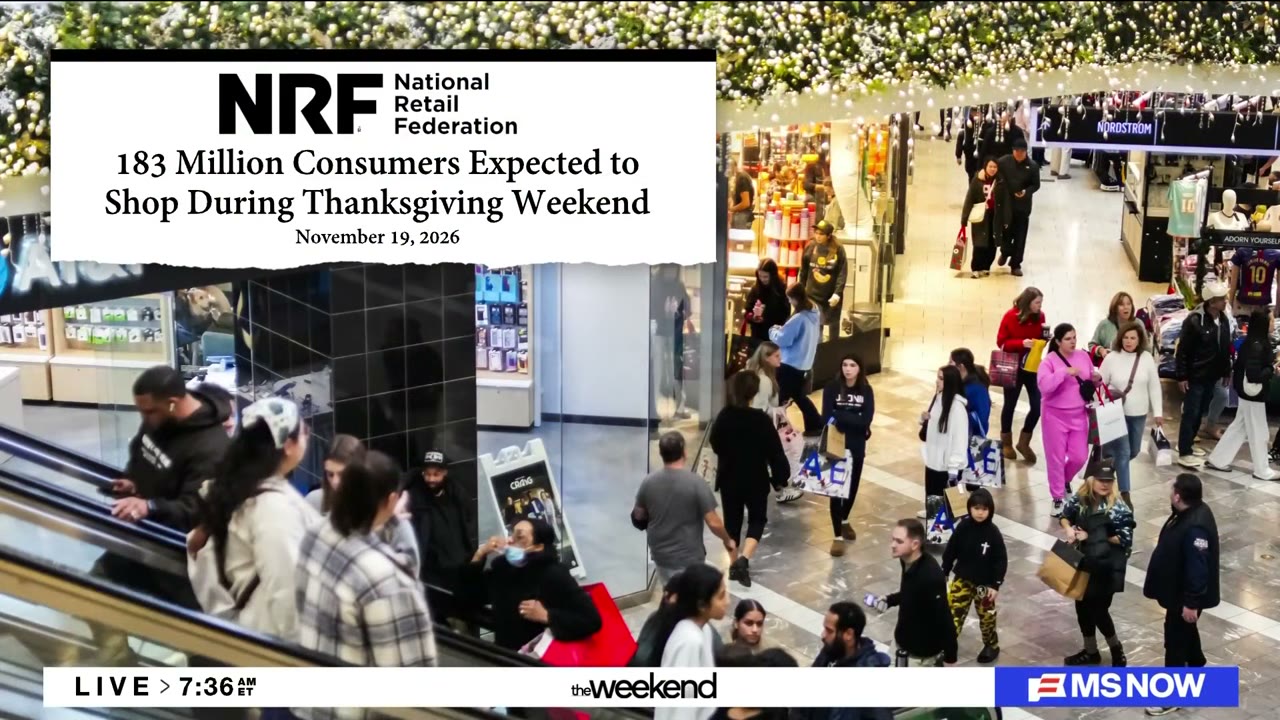
Shoppers are projected to spend about $13 billion online in a single day this holiday weekend — after preliminary data showed Americans already dropped $9.7 billion online the day before.
That $9.7 billion figure came from Adobe tracking online spending as of 6:30 p.m. Saturday, according to the data cited. The National Retail Federation projects 183 million people will shop this holiday weekend.
The spending surge comes as prices are up 3.8% from a year ago, according to the Commerce Department. The average hourly paycheck has not kept up.
So for many families, the money simply is not stretching like it used to — even as the online totals climb.
2Trump's reinstatement of Nvidia CEO rewrites rules of American business, experts warn
Jensen Huang lost his job as Nvidia's CEO — then the White House called, and he had it back. The lesson, one economist says, is that the most important person in his life is not his board, his shareholders or his customers. It's the president.
Justin Wolfers, a professor of economics and public policy at the University of Michigan, said every CEO across the country noticed what happened. "If you want to keep your job, you have to keep the White House happy rather than your customers happy," he said.
He called that incentive "very, very dangerous." Markets are meant to reward whoever builds a better widget, he said; this instead rewards pleasing the president.
He warned the shift is hard to undo once government intervention becomes hardwired into the expectations of businesses and markets.
3Consumer spending masks economic anxiety as confidence hits record low
Consumer spending looks strong — but $6.1 billion of online spending in the first three weeks of November was paid with buy now, pay later plans, and a lot of people don't pay those back.
That's one reason spending is a strange gauge of how Americans feel, according to the discussion. People spend money when they don't have money, through credit cards and installment plans, amid social pressure to keep up around Christmas and Thanksgiving.
Ask people directly and the picture darkens. Leading up to the midterm elections, consumer confidence was at the lowest level it had ever been, and the share of Americans who believe economic policy today is poor is the highest it has ever been — not even close.
Forward-looking signals are weak too: people don't feel comfortable quitting a job, with real fear that losing one means a hard search and little pay rise.
4Trump's focus on daily stock moves is backwards, economist says
President Trump is checking the stock ticker at 10 a.m. and trying to push it up by 11, an economist says — advice he compares to relatives who check their portfolios daily and give themselves heart attacks.
Justin Wolfers said the president should plan for the next year, the next decade, the next century. Instead, he said, the focus is on tomorrow morning's headlines. "This is totally backwards and upside down," he said.
When Trump intervened to keep Jensen Huang as Nvidia's CEO regardless of shareholders, the stock rose — then came way back down over the next two days, Wolfers said.
He said the foundation of American prosperity is not an individual in the Oval Office deciding who gets to be CEO.
5Only 44% of Americans hold stocks as AI revolution raises fears
Only about 44% of Americans have money in the stock market — so most people miss the gains that dominate financial news, even as AI warnings pile up.
This week, Anthropic and OpenAI warned that their AI models are too strong to be released publicly, according to the discussion.
Economist Justin Wolfers separated two AI stories: the money splashing around and data centers being built, which he called kind of boring, and the faster models people actually feel — potentially an industrial revolution in our lifetimes.
That brings real fear, he said, for anyone who felt confident they knew where they would be an expert. He said the gains will need a real discussion about how to share them, so everyone gets to be part of the party.